





Top things to do in Bangkok
Bangkok mixes sacred temples and royal heritage with markets, canals and a buzzing modern city.
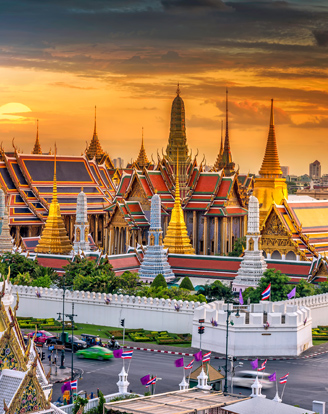
- Grand Palace and Wat Phra Kaew — The former royal residence and Thailand’s most sacred temple, home to the revered Emerald Buddha; a strict dress code applies.
- Wat Pho — Famous for its giant golden Reclining Buddha and its long tradition as a centre of Thai massage.
- Wat Arun — The Temple of Dawn, whose porcelain-decorated spire rises on the west bank of the river and glows at sunset.
- Chao Phraya River and canals — Ride a river boat or longtail boat to see temples, riverside communities and the city’s historic waterways.
- Chatuchak Weekend Market — One of the largest markets in the world, with thousands of stalls selling clothes, crafts, plants and food.
- Chinatown (Yaowarat) — A lively district of gold shops, temples and some of Bangkok’s best street food, especially at night.
- Lumphini Park — A green oasis in the city centre, popular for early-morning exercise and relaxing by the lake.
Best time to visit Bangkok
The best time to visit Bangkok is during the cool, dry season from November to February, when humidity is lower, skies are mostly clear and temperatures are comfortable for exploring temples and markets. This is also the busiest period for tourism, so book accommodation early around Christmas and New Year.
March to May is the hot season, with temperatures often in the mid to high 30s°C and high humidity. The rainy season runs roughly from June to October, bringing heavy but usually short afternoon or evening downpours; September and October tend to be the wettest months. Travel is still very possible in the rains, and hotels are often quieter.
Songkran, the Thai New Year in mid-April, is celebrated with joyful city-wide water fights. Loy Krathong, usually in November, sees people float candlelit offerings on rivers and canals. Chinese New Year is celebrated with great energy in Chinatown.
Getting from the airport
Suvarnabhumi Airport (BKK), Bangkok’s main international airport, lies around 30 km east of the city centre.
- Airport Rail Link — The airport train runs from the basement of the terminal to Phaya Thai station in around 30 minutes, with connections to the BTS Skytrain and MRT underground at Phaya Thai and Makkasan.
- Public taxi — Metered taxis are available from the official taxi rank on the arrivals level. Journeys to central Bangkok usually take 40 minutes to an hour, or longer in heavy traffic. A small airport surcharge and expressway tolls are added to the meter.
- Ride-hailing apps — App-based car services operate in Bangkok and can be booked from designated pick-up points.
- Airport buses and hotel transfers — Buses link the airport with parts of the city, and many hotels offer pick-ups on request.
Bangkok’s traffic can be very heavy at rush hour, so the train is often the quickest option if you travel light.
Where to stay
Bangkok is huge, so staying near a BTS Skytrain or MRT station makes getting around much easier. Each area has its own atmosphere.
- Sukhumvit — A long, lively road with hotels, restaurants, shopping and nightlife, well served by the BTS; suits most first-time visitors.
- Silom and Sathorn — The business district, with good transport links, rooftop bars and easy access to Lumphini Park and the river.
- Riverside — Along the Chao Phraya, with elegant hotels, river views and boat connections to the old city’s temples.
- Rattanakosin and Banglamphu — The historic old town near the Grand Palace, including the busy Khao San Road area, popular with backpackers.
- Siam — The central shopping district, full of malls and well connected by the BTS, ideal for families and shoppers.
Staying close to public transport can save hours otherwise spent in traffic, especially during the rainy season.
Travel tips
- Getting around — The BTS Skytrain, MRT and river boats are the fastest ways to beat traffic. For taxis, insist on the meter or use a ride-hailing app.
- Temple etiquette — Cover shoulders and knees, remove shoes before entering temple buildings, and never point your feet at a Buddha image or touch a person’s head.
- Respect for the monarchy — The Thai royal family is deeply respected, and criticism is a serious offence under Thai law. Stand for the royal anthem when it is played.
- Scams — Be wary of strangers who say a major sight is closed and offer to take you elsewhere; check opening information yourself.
- Payment and tipping — Cash is useful for street food and markets, while cards are accepted in malls and hotels. Tipping is not obligatory but small tips are appreciated.
- Entry requirements — Visa and entry rules depend on nationality and can change, so check before you travel.
Frequently asked questions
What is the best time to visit Bangkok?
November to February is the best time, with cooler, drier weather and lower humidity. March to May is very hot, and the rainy season from June to October brings heavy but usually short afternoon showers.
Which airport serves Bangkok?
Bangkok’s main international gateway is Suvarnabhumi Airport (BKK), located around 30 km east of the city centre. The city also has a second airport, Don Mueang, used mainly for domestic and regional services.
How do I get from the airport to the city centre?
The Airport Rail Link reaches Phaya Thai station in around 30 minutes, connecting with the BTS Skytrain and MRT. Metered taxis take 40 minutes to an hour depending on traffic, and ride-hailing apps are also available.
What currency is used in Bangkok?
Thailand uses the Thai baht (THB). Cards are accepted in hotels, malls and many restaurants, but cash is essential for street food, markets, taxis and small shops. ATMs are easy to find throughout the city.
Do I need a visa to visit Thailand?
Visa requirements depend on your nationality and the purpose of your trip. Check official government sources or the IATA Travel Centre for the latest entry rules well before you travel.
What should I wear to visit temples in Bangkok?
Wear clothing that covers your shoulders and knees, and avoid tight or see-through outfits. Shoes must be removed before entering temple halls, so slip-on footwear is practical. The Grand Palace applies a particularly strict dress code.
Updated: