




Top things to do in Barcelona
Barcelona pairs extraordinary architecture with Mediterranean beaches, lively streets and a celebrated food scene.
- Sagrada Família — Gaudí’s monumental basilica, still under construction after more than a century, with breathtaking stained-glass light inside. Book tickets well in advance.
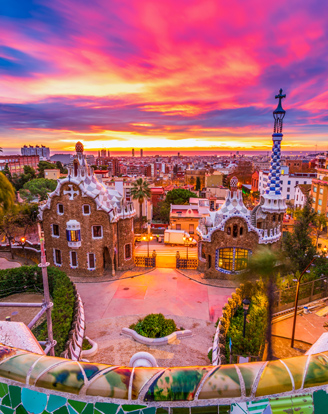
- Park Güell — A hillside park filled with Gaudí’s colourful mosaics, curving terraces and views across the city to the sea.
- Gothic Quarter (Barri Gòtic) — A maze of medieval streets and hidden squares around Barcelona Cathedral, perfect for wandering.
- Casa Batlló and Casa Milà — Two of Gaudí’s most famous buildings on the elegant Passeig de Gràcia, known for their flowing façades and imaginative rooftops.
- La Rambla and La Boqueria — The city’s famous tree-lined promenade and its colourful food market, piled high with fruit, seafood and local produce.
- Montjuïc — A green hill with museums, gardens, a castle and the Olympic sites, reached by cable car or on foot.
- Barceloneta Beach — The city’s best-known beach, lined with a seafront promenade and restaurants serving paella and seafood.
Best time to visit Barcelona
Late spring (May to June) and early autumn (September to October) are ideal, with warm, sunny weather, sea temperatures pleasant enough for swimming by early summer, and slightly fewer visitors than in July and August. These months are perfect for combining sightseeing with time on the beach and long evenings on café terraces.
High summer is hot, humid and very busy, especially along the beaches and in the old town, and accommodation is in high demand. Winter is mild by European standards, with many sunny days and cooler evenings; it is a relaxed season for museums, architecture and food, though it is too cool for most people to swim.
Barcelona’s calendar is full of celebrations. Sant Jordi on 23 April fills the streets with books and roses, the eve of Sant Joan in late June is marked with fireworks and bonfires, and La Mercè, the city’s biggest festival in late September, brings concerts, parades and human towers (castells). Book accommodation early if your trip coincides with these dates or with major trade fairs.
Getting from the airport
Josep Tarradellas Barcelona–El Prat Airport lies about 13 km southwest of the city centre and has two terminals, T1 and T2, linked by a free shuttle bus. Transport options vary slightly depending on your terminal.
- Airport bus — A dedicated express bus runs frequently from both terminals to Plaça de Catalunya in the centre, taking around 35 minutes, with stops at Plaça d’Espanya and on the way.
- Train — Rodalies commuter trains leave from Terminal 2 and reach central stations such as Sants and Passeig de Gràcia in around 20–30 minutes. From T1, take the shuttle bus to T2 first.
- Metro — Metro Line 9 South connects both terminals with the city’s metro network, though reaching the centre requires a change and can take 45 minutes or more.
- Taxi — Official black-and-yellow taxis wait outside both terminals; the ride to the centre takes around 25–35 minutes, depending on traffic.
Airport journeys on public transport often require a specific ticket, so check which fare applies before you travel.
Where to stay
Barcelona’s districts each have a distinct character, and the metro makes it easy to move between them. Think about whether you want to be close to the beach, the historic centre or Gaudí’s architecture when choosing your base.
- Eixample — An elegant grid of wide avenues and modernist buildings around Passeig de Gràcia; ideal for first-time visitors, shoppers and architecture lovers.
- Gothic Quarter and El Born — Atmospheric medieval streets packed with bars, boutiques and the Picasso Museum; great for couples, though it can be busy and noisy at night.
- Gràcia — A former village with small squares, independent shops and a local, relaxed feel; suits travellers who want to live like a resident.
- Barceloneta and Poblenou — Close to the sea and beaches; perfect for summer visits, sea lovers and families.
- Poble-sec and Sant Antoni — Down-to-earth areas near Montjuïc with excellent tapas bars and markets; good value and popular with food lovers.
Travel tips
- Book popular sights early — The Sagrada Família, Park Güell and Gaudí’s houses use timed tickets that often sell out, especially in summer and at weekends.
- Watch your belongings — Pickpockets are active on La Rambla, the metro, the beaches and in crowded areas. Keep bags closed, phones secure and never leave items unattended on the sand.
- Local customs — Catalan is widely used alongside Spanish, and a few words such as “bon dia” (good morning) are appreciated. Swimwear is for the beach, so cover up in shops, restaurants and the city streets.
- Late dining — Lunch is often around 2 pm and dinner from about 9 pm. Many restaurants offer a good-value set lunch menu on weekdays.
- Payment and tipping — Cards are widely accepted. Tipping is optional; rounding up or leaving small change for good service is customary.
- Entry requirements — Check passport, visa and entry rules for your nationality with official sources before you travel, as requirements can change.
Frequently asked questions
What is the best time to visit Barcelona?
May to June and September to October offer warm, sunny weather with fewer crowds than midsummer. July and August are hot and very busy, while winter is mild and quieter, though too cool for swimming.
Which airport serves Barcelona?
Barcelona is served by Josep Tarradellas Barcelona–El Prat Airport (BCN), located about 13 km southwest of the city centre, with two terminals linked by a free shuttle bus.
How do I get from the airport to the city centre?
The express airport bus reaches Plaça de Catalunya in around 35 minutes, and commuter trains from Terminal 2 reach central stations in about 20–30 minutes. Metro Line 9 and official taxis are also available.
What currency is used in Barcelona?
Spain uses the euro (EUR). Cards are accepted almost everywhere, including many small bars and shops, but carrying a little cash is useful for markets and kiosks.
Do I need a visa to visit Spain?
Visa requirements depend on your nationality and the purpose of your trip. Check official government sources or the IATA Travel Centre for the latest rules before travelling.
Do I need to book the Sagrada Família in advance?
Yes, booking ahead is strongly recommended. Entry is by timed ticket and popular slots often sell out days or weeks in advance, especially in summer, at weekends and on holidays.
Updated: