





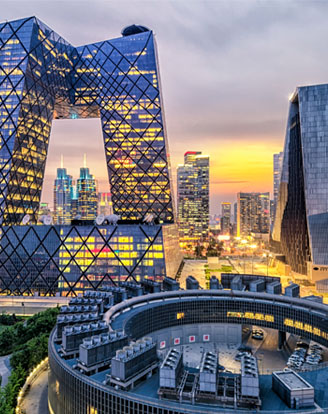
Top things to do in Beijing
Beijing holds several UNESCO World Heritage Sites within easy reach of the city, making it one of the best places in the world to discover Chinese history and culture.
- The Forbidden City — Explore the vast former imperial palace, home to emperors of the Ming and Qing dynasties, with its courtyards, halls and the Palace Museum collections.
- Tiananmen Square — One of the largest public squares in the world, lying at the heart of the city directly south of the Forbidden City.
- The Great Wall — Take a day trip to restored sections such as Mutianyu or Badaling, where you can walk along the ramparts with sweeping mountain views.
- Temple of Heaven — Admire the elegant circular Hall of Prayer for Good Harvests and watch locals practise tai chi, dance and play cards in the surrounding park.
- Summer Palace — Stroll around Kunming Lake, past pavilions, bridges and the painted Long Corridor of this classical imperial garden.
- Hutongs and Houhai — Wander traditional lanes and courtyard houses around Shichahai and Nanluoguxiang, or explore them by bicycle or rickshaw.
- Lama Temple — Visit Yonghegong, a beautiful Tibetan Buddhist temple known for its ornate halls and giant carved Buddha.
Best time to visit Beijing
The best times to visit Beijing are spring (April to May) and autumn (September to October). Temperatures are pleasant, skies are often clear and conditions are ideal for walking the Great Wall and exploring the city’s parks. Autumn in particular brings crisp days and colourful leaves in the hills around the city.
Summer (June to August) is hot and humid, with most of the year’s rain falling in July and August. Winter (December to February) is very cold and dry, but sights are quieter and the snow-dusted palaces and Great Wall can be beautiful. Early spring can bring windy days and occasional dust.
Chinese New Year (January or February) and the National Day Golden Week in early October are major travel periods, when popular attractions become extremely crowded and many sites require advance reservations. If your dates are flexible, visiting outside these holiday weeks makes sightseeing far more comfortable.
Getting from the airport
Beijing Capital International Airport lies around 25 to 30 km northeast of the city centre. Signs are in Chinese and English, and there are several ways to reach the city. Beijing also has a second major airport, Daxing, south of the city.
- Airport Express train — The Capital Airport Express rail line links the terminals with Sanyuanqiao and Dongzhimen on the subway network, taking around 20 to 30 minutes. From there you can connect to the rest of the metro.
- Airport shuttle buses — Buses run to major districts, rail stations and hotel areas, usually taking 45 to 90 minutes depending on the route and traffic.
- Taxi — Use the official taxi ranks outside arrivals. The trip to central Beijing typically takes 40 to 60 minutes, and longer during rush hours. Having your hotel address written in Chinese is very helpful.
Allow plenty of extra time for road journeys during weekday peak hours and around public holidays.
Where to stay
Beijing is spread out, so staying near a subway line makes getting around much easier. The main areas for visitors are found within or close to the Second and Third Ring Roads, and it is worth confirming in advance that your chosen accommodation welcomes international guests.
- Dongcheng (Wangfujing and around) — Central and convenient for the Forbidden City, Tiananmen Square and shopping streets, ideal for first-time visitors.
- Hutong areas near Houhai and Nanluoguxiang — Charming and atmospheric, suited to travellers who want to stay in traditional courtyard-style guesthouses.
- Chaoyang (Sanlitun and the CBD) — Modern and international, with plenty of restaurants, bars and business hotels, a good choice for business travellers and nightlife.
- Xicheng — Quieter and residential, close to Beihai Park and the lakes, suited to those who prefer a calmer base.
- Haidian — Near the Summer Palace and university district, convenient for academic or technology-related visits.
Travel tips
- Getting around — The subway is extensive, affordable and signposted in English. Ride-hailing apps and taxis are widely available; keep destination names in Chinese characters to show drivers.
- Payment — Mobile payment apps dominate everyday transactions. Many allow foreign cards to be linked, but also carry some cash and an international card as a backup.
- Book popular sights ahead — Major attractions such as the Forbidden City often require advance, real-name reservations with your passport details, especially at weekends and holidays.
- Tipping — Tipping is not customary in most restaurants and taxis, although guides and drivers on private tours may appreciate it.
- Safety and comfort — Beijing is generally safe for visitors; carry your passport, as it is needed for hotels, trains and security checks. Check air quality forecasts and dress warmly in winter.
- Entry requirements — Rules vary by nationality and can change at short notice. Check before you travel.
Frequently asked questions
What is the best time to visit Beijing?
Spring (April to May) and autumn (September to October) are the best times to visit Beijing, with mild temperatures and clearer skies. Avoid national holiday weeks if you want smaller crowds.
Which airport serves Beijing?
Beijing is served by Beijing Capital International Airport (PEK), about 25 to 30 km northeast of the city centre. The city also has a second large airport, Beijing Daxing, to the south.
How do I get from the airport to the city centre?
The Capital Airport Express train reaches Dongzhimen in around 20 to 30 minutes, connecting with the subway. Shuttle buses and official taxis are also available, taking roughly 40 to 90 minutes.
What currency is used in Beijing?
China uses the renminbi, whose unit is the yuan (CNY). Mobile payments are the most common way to pay, but it is sensible to carry some cash and an international card as a backup.
Do I need a visa to visit China?
Visa requirements depend on your nationality, the length of your stay and your travel plans. Check official government sources or the IATA Travel Centre for up-to-date rules before travelling.
How do I visit the Great Wall from Beijing?
Popular restored sections such as Mutianyu and Badaling are around 1.5 to 2 hours from the city by car or organised tour. Badaling can also be reached by train. Go early to avoid crowds.
Updated: