




Berlin is spread out but easy to navigate, with major sights clustered in and around Mitte.
- Brandenburg Gate — The neoclassical symbol of the city and of German reunification.
- Reichstag Building — Home of the German parliament, crowned by a glass dome with city views (advance registration is required).
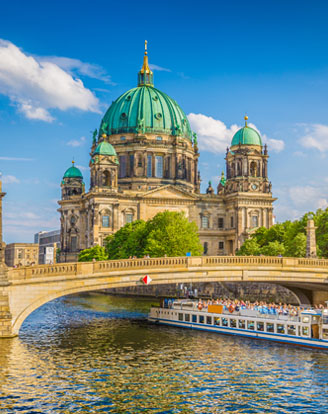
- Museum Island — A UNESCO-listed ensemble of five major museums on an island in the Spree.
- East Side Gallery — The longest surviving stretch of the Berlin Wall, covered in murals by international artists.
- Berlin Wall Memorial — A preserved section of the border strip on Bernauer Strasse that explains the city’s division.
- Memorial to the Murdered Jews of Europe — A powerful field of concrete slabs near the Brandenburg Gate.
- Tiergarten — A vast central park ideal for walking, cycling and beer gardens.
Berlin has warm summers and cold, often grey winters. May to September is the most popular time to visit, when parks, lakes, beer gardens and open-air events are at their best and the days are long. Late spring and early autumn offer pleasant temperatures with fewer crowds.
Winter can be freezing, but the city’s many museums, galleries and cafés make it a rewarding indoor destination, and traditional Christmas markets brighten December. Whatever the season, comfortable shoes are essential, as distances between sights can be large.
Berlin Brandenburg Airport, which replaced the former Tegel and Schönefeld airports, lies south-east of the city just beyond its boundary. Its underground railway station has regional express trains and S-Bahn suburban services to central stations such as Berlin Hauptbahnhof and Alexanderplatz.
Buses also connect the airport with parts of the city, and taxis and ride-hailing services are available outside the terminals. Rail is usually the most reliable way into the centre.
Berlin has an excellent public transport network, so almost any central district makes a good base.
- Mitte — The historic centre, close to major sights; ideal for first-time visitors.
- Kreuzberg — Multicultural, lively and creative; great for food, nightlife and street life.
- Prenzlauer Berg — Leafy streets, cafés and restored buildings; suits families and couples.
- Charlottenburg — Classic West Berlin elegance, shopping on the Kurfürstendamm and a calmer pace.
- Money: Card payments are increasingly common, but some cafés, bars and small shops still prefer cash.
- Getting around: U-Bahn, S-Bahn, trams and buses share one ticket system; validate paper tickets before travelling, as inspections are frequent.
- Etiquette: Don’t cross on a red pedestrian light, keep cycle lanes clear, and tip around 5–10% in restaurants.
- Sundays: Most shops close on Sundays, though museums, cafés and restaurants stay open.
- Safety: Berlin is generally safe; watch for pickpockets at busy stations and tourist hotspots.
Frequently asked questions
Which airport serves Berlin?
Berlin is served by Berlin Brandenburg Airport (BER), south-east of the city. The former Tegel Airport (TXL) closed in 2020.
How do I get from the airport to the city centre?
Regional express trains and S-Bahn trains run from the airport station to central Berlin; buses, taxis and ride-hailing are also available.
What currency is used in Berlin?
Germany uses the euro (EUR). Cards are widely accepted, but it is useful to carry some cash.
Do I need a visa to visit Berlin?
Entry requirements depend on your nationality and can change. Check RwandAir’s travel requirements tool or the official government website before travelling.
When is the best time to visit Berlin?
May to September is warm and lively; spring and autumn are quieter. Winter is cold but great for museums and Christmas markets.
Where can I see the Berlin Wall today?
The East Side Gallery and the Berlin Wall Memorial on Bernauer Strasse preserve the most significant remaining sections, and a double row of cobblestones marks its route in parts of the city.
Updated: