




Top things to do in Brussels
Most of Brussels' highlights lie within or close to the historic centre, making it easy to explore on foot or by metro and tram.
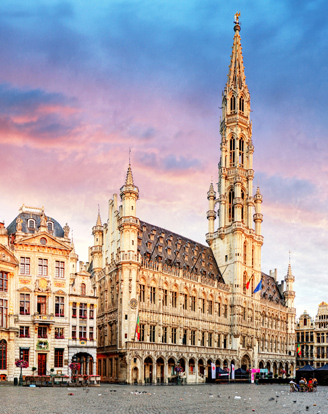
- Grand-Place — The city's magnificent central square, lined with guildhalls and the Gothic Town Hall, and a UNESCO World Heritage Site.
- Manneken Pis — The small bronze statue is a beloved city symbol, often dressed in one of its many costumes.
- Atomium — Built for the 1958 World's Fair, this giant model of an iron crystal offers exhibitions and panoramic views.
- Royal Museums of Fine Arts — Home to Flemish masters and a museum dedicated to René Magritte.
- Comic Strip Route — Follow large murals of famous comic characters painted on buildings across the city.
- Parc du Cinquantenaire — A grand park with a triumphal arch and museums, close to the European Quarter.
- Sablon and the Marolles — Browse antiques and chocolate shops in the Sablon, then the flea market at Place du Jeu de Balle.
Best time to visit Brussels
Brussels has a mild, temperate climate with rain spread throughout the year. Late spring and early autumn, from April to June and in September, usually offer comfortable temperatures for walking and outdoor terraces.
Summer brings the longest days and many outdoor events, while winter is cold and grey but brightened by Christmas markets and festive lights in the centre.
Getting from the airport
Brussels Airport (BRU) is in Zaventem, about 12 km north-east of the city centre. Trains run from the station beneath the terminal to Brussels-North, Brussels-Central and Brussels-South (Midi). City buses, taxis and ride-hailing services are also available outside arrivals.
Where to stay
Brussels is compact and well connected by metro, tram and bus, so most central areas work well as a base.
- Historic centre — Stay close to the Grand-Place, with sights, cafés and shopping on your doorstep.
- Sablon — An elegant area of antiques, galleries and chocolatiers near the art museums.
- Ixelles — A lively, multicultural district known for its Art Nouveau houses, ponds and nightlife.
- European Quarter — Convenient for business travellers visiting the EU institutions, and close to Parc du Cinquantenaire.
Travel tips
- Money — Cards are widely accepted, including contactless payments, but carry a few coins for small purchases.
- Getting around — The metro, trams and buses cover the city, and the centre is easy to explore on foot.
- Language — Brussels is officially bilingual, so street and station names appear in both French and Dutch.
- What to pack — An umbrella or light rain jacket and comfortable shoes for cobbled streets are useful all year.
- Safety — Brussels is generally safe, but watch for pickpockets around busy stations and tourist areas.
- Before you go — Check current entry requirements for Belgium before you travel.
Frequently asked questions
What is the best time to visit Brussels?
April to June and September are ideal for visiting Brussels, with mild weather for sightseeing. December is also popular for its Christmas markets.
Which airport serves Brussels?
Brussels is served by Brussels Airport (BRU), located in Zaventem about 12 km north-east of the city centre.
How do I get from the airport to the city centre?
Trains from the station beneath Brussels Airport run to Brussels-North, Brussels-Central and Brussels-South. Buses, taxis and ride-hailing services are also available.
What currency is used in Brussels?
Brussels uses the euro (EUR). Debit and credit cards, including contactless payments, are widely accepted.
Do I need a visa to visit Belgium?
Entry requirements depend on your nationality and change from time to time. Check the latest requirements with RwandAir's travel requirements tool or the official government website before you travel.
What languages are spoken in Brussels?
French and Dutch are the official languages of Brussels, and French is the most widely spoken day to day. English is commonly understood in hotels, shops and tourist areas.
Updated: