





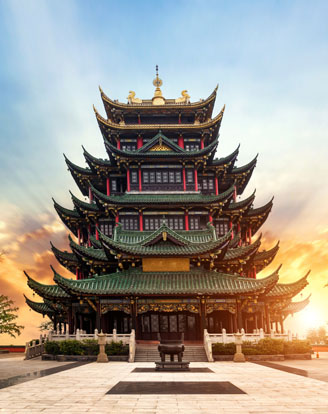
Chongqing’s dramatic terrain makes simply getting around an experience, with river views, stairways and bridges at every turn.
- Hongyadong — A stilted complex of shops and restaurants built into the cliffside, spectacular when lit up at night.
- Jiefangbei — The Liberation Monument at the heart of the Yuzhong peninsula, surrounded by shopping streets.
- Yangtze River Cableway — A cable car across the river offering sweeping views of the city skyline.
- Ciqikou Ancient Town — Old lanes by the Jialing River lined with teahouses, snacks and traditional architecture.
- Liziba monorail station — Watch a monorail train glide straight through a residential building.
- Dazu Rock Carvings — A UNESCO World Heritage Site outside the city, with remarkable Buddhist, Taoist and Confucian cliff sculptures.
- Chongqing hotpot — Try the city’s famous spicy hotpot with numbing Sichuan pepper, a local ritual.
Chongqing has a humid subtropical climate. Summers are long, very hot and humid, earning it a reputation as one of China’s hottest cities, while winters are mild but damp and often grey, with frequent fog that has given it the nickname ‘Fog City’.
Spring, from March to May, and autumn, from September to November, bring the most comfortable temperatures for walking the hilly streets and taking a river cruise. Avoid the national holiday periods, such as the first week of October, when domestic tourism peaks and attractions are crowded.
Chongqing Jiangbei International Airport lies roughly 20 km north of the city centre on the Yuzhong peninsula. It is one of China’s busiest airports, with several terminals.
The metro connects the airport to the city, and is usually the most reliable way to avoid traffic. Taxis wait at official ranks outside arrivals, and ride-hailing apps are widely used. Airport buses also serve major districts. Journey times by road vary with traffic, so allow extra time at peak hours.
Chongqing is huge, so staying close to the rivers and metro lines makes sightseeing easier.
- Yuzhong (Jiefangbei) — The central peninsula with Hongyadong, shopping and river views; ideal for first-time visitors.
- Jiangbei (Guanyinqiao) — North of the Jialing River, with malls and restaurants, and convenient for the airport.
- Nan’an — Across the Yangtze, known for its riverside skyline views and nightlife.
- Shapingba — A university and shopping district, close to Ciqikou and the main railway station.
- Payments: Mobile payments such as Alipay and WeChat Pay dominate; set them up with an international card before travelling and carry some cash as a backup.
- Getting around: The metro and monorail are the easiest way to navigate the hills; expect stairs, slopes and multi-level streets.
- Food: Chongqing food is very spicy; ask for “wei la” (mildly spicy) if you prefer less heat.
- Connectivity: Some international apps and websites may not work in mainland China, so plan your connectivity and download offline maps before you arrive.
- Language: English is limited outside hotels; a translation app and your hotel address written in Chinese are very helpful.
Frequently asked questions
Which airport serves Chongqing?
Chongqing is served by Chongqing Jiangbei International Airport (CKG), about 20 km north of the city centre.
How do I get from the airport to the city centre?
The metro links the airport to central districts. Taxis, ride-hailing apps and airport buses are also available.
What currency is used in Chongqing?
China uses the renminbi yuan (CNY). Mobile payment apps are the main way to pay, with cash as a backup.
Do I need a visa to visit Chongqing?
Entry requirements depend on your nationality and can change. Check RwandAir’s travel requirements tool or the official government website before travelling.
When is the best time to visit Chongqing?
Spring (March to May) and autumn (September to November) are the most comfortable. Summers are extremely hot and humid.
Can I start a Yangtze River cruise in Chongqing?
Yes. Chongqing is a main departure point for multi-day Yangtze cruises through the Three Gorges; book through a reputable operator.
Updated: