




Top things to do in Copenhagen
Copenhagen is compact and flat, making it easy to combine palaces, museums, harbour walks and relaxed cafés in a single day, on foot or by bike.
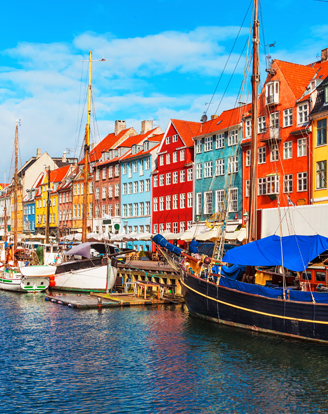
- Nyhavn — The iconic 17th-century canal lined with brightly painted townhouses, wooden ships and waterside terraces, and the starting point for many canal boat tours.
- Tivoli Gardens — One of the world’s oldest amusement parks, right in the city centre, with historic rides, gardens, concerts and beautiful illuminations after dark.
- Rosenborg Castle — A Renaissance royal castle set in the King’s Garden, home to the Danish crown jewels.
- Amalienborg Palace — The home of the Danish royal family, where visitors can watch the daily changing of the guard in the elegant octagonal square.
- Christiansborg Palace — The seat of the Danish parliament on the islet of Slotsholmen, with royal reception rooms and a tower offering sweeping city views.
- The Little Mermaid — The small bronze statue inspired by Hans Christian Andersen’s fairy tale, on the waterfront at Langelinie.
- Christianshavn — A charming canal district with houseboats, spiral church towers and the alternative community of Christiania.
Best time to visit Copenhagen
Late spring and summer, from May to September, are the most popular months to visit. Days are very long, with daylight lasting well into the evening around midsummer, and the city moves outdoors to harbour baths, parks, street-food markets and canal-side terraces. July and August are the warmest and busiest months.
Summer is also festival season, with a renowned jazz festival filling the streets with concerts in early July, and Midsummer Eve celebrations on 23 June marked by bonfires along the coast and lakes. Autumn brings crisp air, fewer visitors and a busy cultural calendar, although days shorten quickly from October.
Winter is cold, dark and often damp, but Copenhagen embraces the season with candlelit cafés and festive Christmas markets from late November, including seasonal illuminations at Tivoli Gardens. January to March is the quietest period, good for museums, design shops and a cosy, uncrowded city break.
Getting from the airport
Copenhagen Airport is located at Kastrup, only around 8 kilometres south-east of the city centre, making it one of the most conveniently located airports in Europe.
- Metro — The driverless metro runs around the clock from the station at Terminal 3, reaching Kongens Nytorv, close to Nyhavn, in around 15 minutes.
- Train — Regional trains run from the same terminal to Copenhagen Central Station in around 15 minutes, with many services continuing across Denmark or over the bridge to southern Sweden.
- Bus — City buses connect the airport with nearby districts, though journeys are slower than by metro or train.
- Taxi — Taxi ranks are located outside the terminals, and the drive to the city centre usually takes around 20 minutes, depending on traffic.
Tickets for the metro, trains and buses are part of the same system and can be bought from machines at the airport or through the official transport app. Make sure your ticket covers the airport zone before boarding, as inspections are common.
Where to stay
Copenhagen’s neighbourhoods are close together and well linked by metro, trains, buses and cycle lanes, so wherever you stay you are rarely far from the centre. Each area has its own character, from royal grandeur to creative street life.
- Indre By (Inner City) — The historic heart around Strøget, Nyhavn and the palaces, ideal for first-time visitors who want to walk everywhere.
- Vesterbro — A former working-class district near the Central Station, now full of cafés, restaurants and nightlife in the Meatpacking District; great for foodies and younger travellers.
- Nørrebro — A multicultural, creative neighbourhood with independent shops, lively bars and the lakes nearby, suited to travellers who like a local feel.
- Østerbro — A calm, elegant residential area with parks and waterfront promenades, a good choice for families and couples.
- Christianshavn — A picturesque canal district close to the centre, perfect for travellers seeking charm and a quieter atmosphere.
Travel tips
- Getting around — Copenhagen is one of the world’s most bike-friendly cities, with wide dedicated lanes. Renting a bike is easy, but follow local rules: keep to the right, signal before stopping and never ride on pavements.
- Payment — Cards and mobile payments are accepted almost everywhere, and some businesses no longer take cash at all, so you may rarely need Danish kroner in notes.
- Tipping — Service charges are included in restaurant bills, so tipping is not expected, although rounding up for excellent service is appreciated.
- Safety — Copenhagen is generally very safe, but keep an eye on your belongings in busy areas and stations, and watch out for cyclists when crossing lanes.
- Etiquette — Danes value punctuality, informality and personal space. Speaking quietly on public transport and waiting your turn in queues are expected.
- Entry requirements — Visa and entry rules depend on your nationality. Check the latest requirements with official sources before you travel.
Frequently asked questions
What is the best time to visit Copenhagen?
May to September offers long days, mild weather and a lively outdoor atmosphere, with festivals in early summer. Late November and December are also popular for Christmas markets and festive lights.
Which airport serves Copenhagen?
Copenhagen is served by Copenhagen Airport (CPH) at Kastrup, around 8 kilometres south-east of the city centre. It is the largest airport in the Nordic region and is linked to the city by metro and train.
How do I get from the airport to the city centre?
The metro runs around the clock and reaches Kongens Nytorv in about 15 minutes. Regional trains reach Copenhagen Central Station in around 15 minutes, and a taxi takes about 20 minutes.
What currency is used in Copenhagen?
Denmark uses the Danish krone (DKK), not the euro. Cards and mobile payments are accepted almost everywhere, and some shops and cafés no longer accept cash, so a payment card is essential.
Do I need a visa to visit Denmark?
Visa requirements depend on your nationality and the purpose of your trip. Please check official government sources or the IATA Travel Centre for the latest entry requirements before travelling.
Is Copenhagen easy to get around by bike?
Yes. Copenhagen is famous for its cycling culture, with wide, separated bike lanes and flat streets. Bikes are easy to rent, but follow local rules, signal clearly and keep to the right in bike lanes.
Updated: