




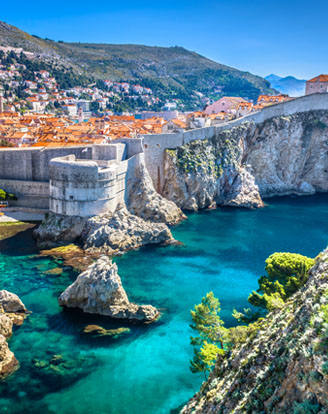
Dubrovnik’s Old Town is compact, and the surrounding coast and islands are easy to explore by boat.
- City Walls — Walk the complete circuit of medieval walls for unforgettable views over terracotta rooftops and the sea.
- Stradun — The Old Town’s gleaming limestone main street, lined with cafés, shops and historic buildings.
- Rector’s Palace — A Gothic-Renaissance palace that was once the seat of the Republic of Ragusa, now a museum.
- Mount Srđ cable car — Ride up the mountain behind the city for panoramic views, especially at sunset.
- Lokrum Island — A short boat trip to a wooded island with botanical gardens, rocky swimming spots and peacocks.
- Fort Lovrijenac — A dramatic fortress on a sea cliff just outside the walls.
- Elaphiti Islands — Day cruises to peaceful islands such as Koločep, Lopud and Šipan.
Dubrovnik has a Mediterranean climate with hot, dry summers and mild, wetter winters. The sea is warm enough for swimming from around June to October.
May, June, September and October are ideal, with sunshine, warm seas and fewer crowds than in July and August, when the Old Town is at its busiest and cruise ship visitors add to the numbers. The long-established Dubrovnik Summer Festival fills the city with theatre and music in July and August. Winter is quiet and mild, though some hotels and restaurants close for the season.
Dubrovnik Airport is at Čilipi, about 20 km south-east of the city, along a scenic coastal road.
An airport shuttle bus connects with arriving flights and runs to the main bus station and a stop near the Old Town. Taxis wait outside the terminal, and ride-hailing apps operate in the area. Many hotels can arrange private transfers. Car hire is available, but parking near the Old Town is very limited. Journey times depend on traffic, which can be heavy in summer.
Dubrovnik’s areas range from historic lanes to leafy peninsulas with beaches.
- Old Town — Stay inside the walls for atmosphere and walkability; expect steps and busy daytime crowds.
- Ploče — Just east of the Old Town, with sea views and quick access to Banje Beach.
- Lapad — A green peninsula with beaches, promenades and hotels, popular with families.
- Gruž — Near the port and ferry terminal, practical for island hopping and good-value stays.
- Money: Croatia uses the euro; cards are widely accepted, but carry some cash for small purchases.
- Getting around: Local buses connect the Old Town with Lapad and Gruž; the Old Town itself is car-free.
- Crowds: Visit the walls and Stradun early in the morning or late in the day to avoid peak crowds.
- Etiquette: Cover up when away from the beach and in churches; local rules discourage walking around town in swimwear.
- Sun and sea: Wear water shoes for rocky beaches and use strong sun protection in summer.
Frequently asked questions
Which airport serves Dubrovnik?
Dubrovnik is served by Dubrovnik Airport (DBV) at Čilipi, about 20 km south-east of the city.
How do I get from the airport to the city centre?
Take the airport shuttle bus, a taxi, a ride-hailing car or a private transfer arranged by your hotel.
What currency is used in Dubrovnik?
Croatia uses the euro (EUR). Cards are widely accepted.
Do I need a visa to visit Dubrovnik?
Entry requirements depend on your nationality and can change. Check RwandAir’s travel requirements tool or the official government website before travelling.
When is the best time to visit Dubrovnik?
May to June and September to October offer warm weather and a warm sea with fewer crowds than midsummer.
How long does it take to walk Dubrovnik’s city walls?
Allow around one to two hours to walk the full circuit at a relaxed pace, with plenty of stops for photos.
Updated: