




Top things to do in Lisbon
Lisbon rewards slow exploration: climb its hills on foot or by tram, pause at hilltop viewpoints and let the city’s mix of history and street life unfold.
- Alfama — Lisbon’s oldest quarter, a maze of steep alleys, tiled houses and small squares where fado music drifts from taverns in the evening.
- São Jorge Castle — A hilltop Moorish castle with restored ramparts and some of the finest views over the city’s rooftops and the Tagus river.
- Jerónimos Monastery — A masterpiece of the ornate Manueline style in Belém and a UNESCO World Heritage Site, built to celebrate Portugal’s maritime explorers.
- Belém Tower — An iconic 16th-century fortress on the riverbank, also UNESCO-listed, close to the Monument to the Discoveries.
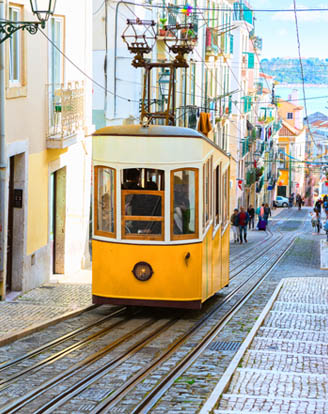
- Tram 28 — The famous yellow vintage tram that rattles through Graça, Alfama, Baixa and Estrela, a classic way to see the historic centre.
- Praça do Comércio and Baixa — The grand riverside square and the elegant grid of streets rebuilt after the 1755 earthquake, great for strolling and shopping.
- Sintra — A day trip by train to a romantic hill town of colourful palaces, gardens and forested hills, also a UNESCO World Heritage Site.
Best time to visit Lisbon
Spring, from March to June, and autumn, from September to October, offer the most pleasant weather for exploring Lisbon’s hills, with mild to warm temperatures, plenty of sunshine and fewer crowds than in high summer. The sea is warm enough for swimming at nearby beaches from late spring to early autumn.
June is especially lively thanks to the city’s popular festivities, when neighbourhoods such as Alfama fill with street parties, music, decorations and the smell of grilled sardines, peaking around the feast of Saint Anthony on 13 June. July and August are hot, sunny and busy, though Atlantic breezes usually keep the heat more bearable than in inland Portugal.
Winter, from November to February, is mild compared with much of Europe, with cooler days and occasional heavy rain. It is the quietest season, ideal for museums, cafés and a relaxed city break without queues, and hotels are generally easier to find.
Getting from the airport
Humberto Delgado Airport is one of Europe’s most centrally located capital airports, only around 7 kilometres north of the historic centre, so transfers are quick and straightforward.
- Metro — The red line starts at the airport station beside Terminal 1 and connects with the other lines. Reaching Baixa-Chiado or other central stations, with one change, takes around 25 to 30 minutes.
- Airport bus — Shuttle buses link the terminals with key points in the centre, such as Praça do Comércio and Cais do Sodré, in around 30 to 40 minutes.
- City buses — Regular city buses also serve the airport, although luggage space can be limited at busy times.
- Taxi and ride-hailing — Taxis wait outside the arrivals hall, and ride-hailing services are widely used. The drive to the centre usually takes 15 to 25 minutes, depending on traffic.
Rechargeable transport cards for the metro, buses, trams and funiculars can be bought at machines in the airport metro station. Note that Terminal 2 is served by a free shuttle bus from Terminal 1.
Where to stay
Lisbon’s central neighbourhoods are compact but hilly, so consider how much walking you want to do and choose a base close to a metro station or tram line.
- Baixa and Chiado — Flat, central and elegant, with shops, cafés and excellent transport links, ideal for first-time visitors.
- Alfama — Atmospheric and traditional, with fado houses and river views, perfect for travellers seeking character, though its steep lanes can be tiring.
- Bairro Alto and Príncipe Real — Bairro Alto is known for lively nightlife, while neighbouring Príncipe Real offers boutiques, gardens and a calmer, stylish feel.
- Avenida da Liberdade — A grand tree-lined boulevard with upmarket shopping and good metro access, suited to business travellers and couples.
- Belém — A quieter riverside district near the great monuments, a good choice for families and those who prefer a relaxed pace.
Book early for June festivities and summer, and if you have heavy luggage, look for a building with a lift, as many older houses have steep stairs.
Travel tips
- Getting around — Walking is the best way to explore, complemented by the metro, historic trams, funiculars and the public lift of Santa Justa. Wear comfortable shoes with good grip, as the traditional stone pavements can be slippery.
- Payment — Cards are widely accepted, but small cafés, taverns and markets may prefer cash or have a minimum spend for card payments.
- Tipping — Tipping is modest in Portugal. Rounding up or leaving around 5 to 10 percent for good service in restaurants is appreciated but not required.
- Safety — Lisbon is generally safe, but pickpockets operate on busy trams such as the 28 and in crowded tourist areas, so keep valuables secure.
- Etiquette — A polite “bom dia” (good morning) or “obrigado/obrigada” (thank you) goes a long way. Lunch and dinner are typically eaten later than in northern Europe.
- Entry requirements — Visa and entry rules depend on your nationality. Check the latest requirements with official sources before you travel.
Frequently asked questions
What is the best time to visit Lisbon?
March to June and September to October offer mild, sunny weather and fewer crowds. June brings lively street festivals, while July and August are hot and busy. Winter is mild and quiet, with occasional rain.
Which airport serves Lisbon?
Lisbon is served by Humberto Delgado Airport (LIS), located only around 7 kilometres north of the historic centre. It is Portugal’s largest airport and is linked to the city by metro, buses and taxis.
How do I get from the airport to the city centre?
The metro red line runs from the airport and reaches central stations such as Baixa-Chiado in about 25 to 30 minutes with one change. Airport buses take 30 to 40 minutes, and a taxi takes 15 to 25 minutes.
What currency is used in Lisbon?
Lisbon uses the euro (EUR), like the rest of Portugal. Cards are widely accepted, but carry some cash for small cafés, taverns and markets, where card payments may not always be possible.
Do I need a visa to visit Portugal?
Visa requirements depend on your nationality and the purpose of your trip. Please check official government sources or the IATA Travel Centre for the latest entry requirements before travelling.
Is Lisbon a hilly city to walk around?
Yes. Lisbon is built on seven hills, with steep streets and stone pavements. Comfortable shoes are essential, and trams, funiculars, the metro and the Santa Justa lift help you avoid the steepest climbs.
Updated: