




Top things to do in Lyon
Lyon’s historic heart spreads across the Presqu’île peninsula and the slopes of Fourvière hill, with most sights linked by metro, tram or funicular.
- Vieux Lyon — One of Europe’s largest Renaissance quarters, with cobbled lanes, hidden courtyards and traboules, the covered passageways that cut between buildings.
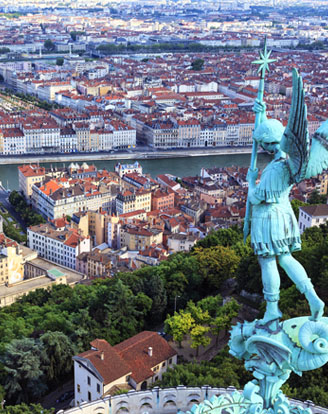
- Basilica of Notre-Dame de Fourvière — A richly decorated 19th-century basilica on the hilltop with sweeping views over the city; the Roman theatres of Lugdunum lie close by.
- Presqu’île — The lively peninsula between the two rivers, home to the vast Place Bellecour, elegant shopping streets and the Museum of Fine Arts on Place des Terreaux.
- Les Halles de Lyon Paul Bocuse — The city’s famous covered food market, ideal for tasting local cheeses, charcuterie, oysters and pastries.
- Parc de la Tête d’Or — A large urban park with a lake, botanical gardens, glasshouses and a small zoo, popular with families.
- Croix-Rousse — The former silk weavers’ district on a hill, known for its steep stairways, painted murals and relaxed village feel.
- Musée des Confluences — A striking modern museum of science and human societies at the tip of the peninsula, where the two rivers meet.
Best time to visit Lyon
Spring and early autumn, from April to June and September to October, are ideal for exploring Lyon on foot, with mild temperatures and pleasant evenings for dining on terraces along the rivers and in the old town.
Summer can be hot, with July and August the warmest months. Some small, family-run restaurants close for part of August, while open-air concerts and performances take place in the Roman theatres of Fourvière. Winters are cool and often grey, with occasional frost.
The highlight of the year is the Fête des Lumières, or Festival of Lights, held over several nights around 8 December, when façades, squares and parks are transformed by light installations. It draws very large crowds, so book accommodation well in advance.
Getting from the airport
Lyon–Saint-Exupéry Airport lies around 25 kilometres east of the city centre and is linked to the city by a dedicated express tram and by road.
- Rhônexpress tram — An express tram runs frequently between the airport and Part-Dieu railway station in around 30 minutes. From Part-Dieu, the metro and city trams reach the rest of Lyon.
- High-speed rail — The airport has its own TGV station, which is useful if you are continuing directly to other French cities by train.
- Taxi — Taxis wait outside the terminals. The drive to the centre usually takes 30 to 45 minutes depending on traffic, and is the most expensive option.
Allow extra time during weekday rush hours, when the motorways and ring roads around Lyon can be congested.
Where to stay
Lyon is well served by metro, tram and bus, so staying in any central district keeps the main sights within easy reach.
- Presqu’île — The most central choice, between Bellecour and the Opera, with shops, restaurants and quick access to both riverbanks; ideal for first-time visitors.
- Vieux Lyon — Atmospheric and full of character, suited to travellers who want Renaissance streets, bouchons and the Fourvière funicular on their doorstep.
- Croix-Rousse — A hilltop neighbourhood with a local, village-like feel, good for longer stays and for those who enjoy markets and independent cafés.
- Part-Dieu — The business district around the main railway station, convenient for the airport tram and onward train connections.
- Confluence — A modern waterfront district with contemporary architecture, suited to travellers who prefer newer surroundings.
Travel tips
- Getting around — Metro, trams, buses and the funiculars up Fourvière hill share one ticketing system. Validate your ticket each time you board, as inspections are frequent.
- Eating out — Traditional bouchons serve hearty Lyonnais dishes. Lunch is usually served from around noon to 2 pm, and booking ahead is wise for popular restaurants in the evening.
- Tipping — Service is included in French restaurant bills. Leaving small change or rounding up for good service is appreciated but not expected.
- Payment — Cards, including contactless payment, are widely accepted, though some market stalls and small cafés prefer cash.
- Traboules — Many passageways run through residential buildings. Keep noise down and respect any doors that are closed to visitors.
- Entry requirements — Visa and entry rules depend on your nationality. Check the latest requirements with official sources before you travel.
Frequently asked questions
What is the best time to visit Lyon?
April to June and September to October bring mild weather that is ideal for walking and terrace dining. Visit around 8 December for the Festival of Lights, but book accommodation well ahead.
Which airport serves Lyon?
Lyon is served by Lyon–Saint-Exupéry Airport (LYS), located around 25 kilometres east of the city centre. It has its own high-speed railway station and an express tram link to the city.
How do I get from the airport to the city centre?
The Rhônexpress tram connects the airport with Part-Dieu station in around 30 minutes, where you can change to the metro or city trams. A taxi to the centre usually takes 30 to 45 minutes.
What currency is used in Lyon?
Lyon uses the euro (EUR), like the rest of France. Credit and debit cards are widely accepted, but it is useful to carry a little cash for markets, bakeries and small cafés.
Do I need a visa to visit France?
Visa requirements depend on your nationality and the purpose of your trip. Please check official government sources or the IATA Travel Centre for the latest entry requirements before travelling.
What is a bouchon in Lyon?
A bouchon is a traditional Lyonnais restaurant serving hearty local dishes such as quenelles, sausages and praline tart in a warm, convivial setting. You will find them across the old town and the Presqu’île.
Updated: