




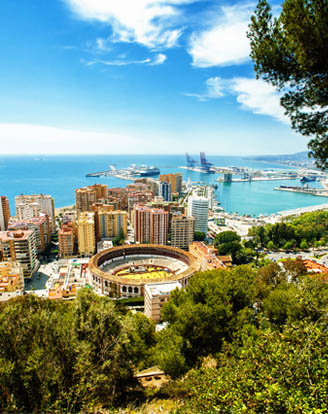
Top things to do in Málaga
Málaga’s historic centre is compact and largely pedestrianised, with monuments, museums and the seafront all within easy walking distance.
- Alcazaba — A beautifully preserved Moorish fortress-palace on the hillside above the city, with courtyards, fountains and gardens.
- Gibralfaro Castle — The hilltop castle above the Alcazaba, linked by ancient walls, offers some of the best panoramic views over the city, port and bay.
- Málaga Cathedral — A vast Renaissance cathedral nicknamed “La Manquita”, the one-armed lady, because its second tower was never completed.
- Picasso Museum — Housed in a sixteenth-century palace, it celebrates the artist born in Málaga, with works spanning his long career.
- Roman Theatre — The remains of a first-century theatre at the foot of the Alcazaba, rediscovered in the twentieth century.
- Atarazanas Market — The city’s central food market, set behind a Moorish gateway, ideal for fresh seafood, fruit and local produce.
- Muelle Uno and La Malagueta — A palm-lined harbour promenade leading to the city’s main sandy beach, where beach bars grill sardines on skewers.
Best time to visit Málaga
Spring, from March to June, and autumn, from September to November, are the best times to visit Málaga. Temperatures are warm and sunny without the intense heat of midsummer, making it ideal for sightseeing, walking in the hills and day trips around Andalusia. The sea is usually warm enough for swimming from June to October.
Holy Week, or Semana Santa, in March or April is one of the city’s most important events, with dramatic processions through the old town. In August, the Málaga Fair fills the streets with music, dancing and celebrations for around a week. July and August are hot and busy, especially on the beaches.
Winter is mild and often sunny compared with much of Europe, making Málaga a popular escape from colder climates. Rain falls mainly between November and March, but sunny days are frequent, and the city is quieter and good value for cultural visits and food tours.
Getting from the airport
Málaga–Costa del Sol Airport lies around 8 kilometres south-west of the city centre and is one of the busiest airports in Spain.
- Suburban train — The C1 commuter line runs from the airport station to Málaga María Zambrano, the main railway station, and on to Centro-Alameda near the old town. The journey takes around 10 to 15 minutes.
- Airport bus — An express bus links the terminal with the city centre, the port area and the bus station in around 20 to 30 minutes, depending on traffic.
- Taxi — Taxi ranks are located outside arrivals, and the drive to the centre usually takes around 15 to 20 minutes.
- Costa del Sol resorts — The same commuter line continues west along the coast to Torremolinos, Benalmádena and Fuengirola, and coaches serve Marbella and other towns.
Train tickets can be bought from machines at the airport station, which is a short walk from the terminal.
Where to stay
Málaga is compact, and most visitors stay in or near the historic centre, within walking distance of the main sights and the beach.
- Historic Centre — Ideal for first-time visitors who want to walk to the cathedral, the Alcazaba, museums and tapas bars around Calle Larios.
- Soho — A creative district between the centre and the port, known for its street art, galleries and contemporary restaurants.
- La Malagueta — A seafront area beside the main city beach, suited to travellers who want sea views and easy access to the old town.
- Pedregalejo and El Palo — Former fishing districts east of the centre, with a relaxed beach atmosphere and seafood restaurants, popular with families.
- Near María Zambrano station — Practical for train connections to other Andalusian cities and the airport, with a range of accommodation.
Travel tips
- Getting around — The historic centre is best explored on foot. City buses, a metro line and the commuter train serve the wider area, and taxis are easy to find.
- Meal times — Spaniards eat late: lunch is usually from around 2pm and dinner from 9pm. Tapas bars are a great way to sample many local dishes.
- Afternoon closures — Some smaller shops close for a few hours in the early afternoon, though larger stores and the main shopping streets stay open.
- Tipping — Tipping is not obligatory. Leaving small change or around 5 to 10 percent in restaurants for good service is appreciated.
- Sun protection — The Andalusian sun is strong even in spring and autumn, so use sunscreen, wear a hat and drink plenty of water.
- Entry requirements — Visa and entry rules depend on your nationality. Check the latest requirements with official sources before you travel.
Frequently asked questions
What is the best time to visit Málaga?
March to June and September to November offer warm, sunny weather for sightseeing and day trips without the peak summer heat. Holy Week and the August fair are festive but busy, so book accommodation early.
Which airport serves Málaga?
Málaga is served by Málaga–Costa del Sol Airport (AGP), located around 8 kilometres south-west of the city centre. It is one of Spain’s busiest airports and the main gateway to the Costa del Sol.
How do I get from the airport to the city centre?
The C1 commuter train reaches María Zambrano station and Centro-Alameda in around 10 to 15 minutes. An express bus takes around 20 to 30 minutes, and taxis reach the centre in about 15 to 20 minutes.
What currency is used in Málaga?
Málaga uses the euro (EUR), like the rest of Spain. Cards and contactless payments are widely accepted in shops, restaurants and on public transport, though some small bars and markets prefer cash.
Do I need a visa to visit Spain?
Visa requirements depend on your nationality and the purpose of your trip. Please check official government sources or the IATA Travel Centre for the latest entry requirements before travelling.
Is Málaga a good base for exploring Andalusia?
Yes. Málaga has good rail and road links to Granada, Córdoba, Seville and Ronda, as well as the white villages and the Costa del Sol resorts, making it a convenient base for day trips around southern Spain.
Updated: