




Top things to do in Nice
Nice is compact and easy to explore on foot, with the old town, seafront and main squares all within a short walk of each other.
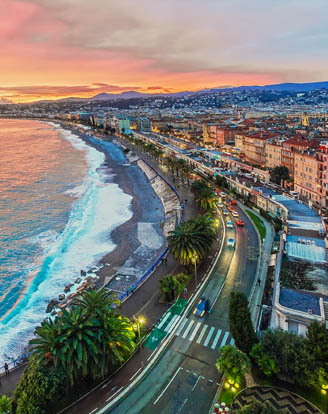
- Promenade des Anglais — The famous seafront boulevard stretching along the Baie des Anges, perfect for walking, cycling and watching the sunset over the sea.
- Vieux Nice — The old town’s narrow lanes are lined with baroque churches, ochre façades, small shops and cafés serving local specialities such as socca.
- Cours Saleya — A lively square in the old town known for its daily flower and produce market, with restaurant terraces all around.
- Castle Hill — A hilltop park with waterfalls, ruins and panoramic views over the port, the old town and the curve of the bay.
- Place Masséna — The city’s elegant main square, with its checkerboard paving, red façades and fountains, linking the old town with the modern centre.
- Matisse and Chagall museums — Two celebrated art museums in the hillside district of Cimiez, dedicated to artists who drew inspiration from the Riviera light.
- Coastal day trips — Trains and buses make it easy to visit the medieval village of Èze, Villefranche-sur-Mer, Monaco and Antibes.
Best time to visit Nice
Nice enjoys a sunny Mediterranean climate. Late spring, from May to June, and early autumn, from September to October, are the most pleasant times to visit, with warm days, sea temperatures suitable for swimming and fewer crowds than in high summer.
July and August are hot and very busy, as the whole Riviera fills with holidaymakers; beaches, trains and restaurants are crowded, and accommodation should be booked well ahead. Late spring also brings major events along the coast, which can push up demand for hotels.
Winters are mild and relatively sunny, making Nice a popular winter escape, although swimming is only for the brave. The famous Nice Carnival, with parades and flower battles, takes place in February and is one of the highlights of the year.
Getting from the airport
Nice Côte d’Azur Airport sits on the seafront around 7 kilometres west of the city centre, making it one of the most conveniently located airports in France.
- Tram — Tram line 2 runs from the airport terminals to the city centre and the port, taking around 25 to 30 minutes to reach central stops such as Jean Médecin.
- Bus — Regional and express buses link the airport with Nice and with other Riviera towns, including Monaco, Cannes and Antibes.
- Train — The Nice Saint-Augustin station, a short walk from the terminals, has regional trains along the coast.
- Taxi — Taxis wait outside both terminals. The drive to the centre usually takes around 20 minutes, longer in summer traffic.
Buy tram and bus tickets before boarding, from machines at the stops, and keep them until the end of your journey.
Where to stay
Most visitors stay close to the sea or the old town, from where the main sights, beaches and train station are easy to reach on foot or by tram.
- Vieux Nice — Full of character and close to the markets, restaurants and beaches, ideal for travellers who want to be in the heart of the action.
- Promenade des Anglais — Seafront hotels with sea views, suited to beach lovers and those who want to stroll along the bay.
- Carré d’Or — An elegant central district between Place Masséna and the sea, with upmarket shops and easy access to everything.
- Le Port — The area around the harbour, with a more local feel, good restaurants and quick access to Castle Hill and eastern beaches.
- Near Nice-Ville station — Practical for day trips by train, with a wide range of accommodation for different budgets.
Travel tips
- Beaches — Most beaches in Nice are pebbly rather than sandy. Water shoes and a cushioned mat make a day by the sea more comfortable; private beach clubs offer loungers.
- Getting around — The tram network, buses and regional trains along the coast are efficient and inexpensive, so a car is not needed for most visits.
- Dress — Swimwear is for the beach; cover up when walking through the town, shops and restaurants.
- Safety — Nice is generally safe, but pickpocketing occurs in busy areas, on public transport and on the Promenade. Keep valuables close.
- Tipping — Service is included in restaurant bills. Rounding up or leaving small change for good service is appreciated but not expected.
- Entry requirements — Visa and entry rules depend on your nationality. Check the latest requirements with official sources before you travel.
Frequently asked questions
What is the best time to visit Nice?
May to June and September to October offer warm weather, pleasant sea temperatures and fewer crowds. July and August are hot and busy, while February is the time for the famous Nice Carnival.
Which airport serves Nice?
Nice is served by Nice Côte d’Azur Airport (NCE), located on the seafront around 7 kilometres west of the city centre. It is one of France’s busiest airports and also serves Monaco and the wider Riviera.
How do I get from the airport to the city centre?
Tram line 2 links the airport terminals with the city centre in around 25 to 30 minutes. Buses also serve Nice and nearby Riviera towns, and a taxi to the centre takes around 20 minutes.
What currency is used in Nice?
Nice uses the euro (EUR), like the rest of France. Cards are widely accepted in shops and restaurants, but carrying some cash is useful for markets, beach kiosks and small cafés.
Do I need a visa to visit France?
Visa requirements depend on your nationality and the purpose of your trip. Please check official government sources or the IATA Travel Centre for the latest entry requirements before travelling.
Can I visit Monaco on a day trip from Nice?
Yes. Monaco lies around 20 kilometres east of Nice and is easy to reach by regional train or bus along the coast, making it a popular day trip for a few hours or a full day.
Updated: