




Top things to do in Oslo
Oslo is compact and green, with its main sights spread along the harbour and a short tram, bus or ferry ride from the centre.
- Oslo Opera House — A gleaming white landmark on the waterfront whose sloping roof you can walk up for views across the fjord and city.
- Vigeland Sculpture Park — Set within Frogner Park, it displays more than 200 sculptures by Gustav Vigeland and is free to explore year-round.
- Akershus Fortress — A medieval castle and fortress overlooking the harbour, with ramparts that make a pleasant walk at sunset.
- Bygdøy peninsula — Home to several major museums, including an open-air folk museum and museums devoted to polar exploration and ocean voyages.
- Munch Museum — A waterfront museum dedicated to Edvard Munch, the Norwegian painter best known for The Scream.
- Holmenkollen — The famous ski jump in the hills above the city, with a ski museum and sweeping views over Oslo and the fjord.
- Oslofjord islands — Local ferries serve small islands in the inner fjord, ideal for swimming, picnics and coastal walks in summer.
Best time to visit Oslo
May to September is the most popular time to visit, with mild temperatures and very long days. Around midsummer the sky barely darkens, and locals head outdoors to swim, sail and relax in the parks. July is the warmest month and the busiest for visitors.
Constitution Day on 17 May is Norway’s biggest national celebration, with parades, flags and people in traditional dress filling the streets. Early autumn brings crisp air and colourful forests, while October and November tend to be grey and wet.
Winter is cold and dark, with short days, but snow transforms the forests and hills around the city into a playground for cross-country skiing, sledging and skating. December adds Christmas markets and a festive atmosphere in the centre.
Getting from the airport
Oslo Airport lies at Gardermoen, around 50 kilometres north of the city centre, and is linked to Oslo by fast and frequent rail services.
- Airport express train — Dedicated express trains run from the station beneath the terminal to Oslo Central Station in around 20 minutes, continuing to other city stations.
- Regional trains — National rail services also stop at the airport and reach Oslo Central Station in around 25 minutes.
- Airport buses — Express coaches connect the airport with various parts of the city in roughly 40 to 60 minutes, depending on the stop.
- Taxi — Taxis wait outside the terminal. The drive takes around 45 minutes, and it is by far the most expensive option given the distance.
Where to stay
Central Oslo is walkable, and trams, buses and the metro make it easy to reach other districts, so you can choose based on the atmosphere you prefer.
- Sentrum — The city centre around the main pedestrian street, convenient for first-time visitors and close to Oslo Central Station.
- Aker Brygge and Tjuvholmen — A modern waterfront area with promenades, galleries and restaurants, suited to travellers who want harbour views.
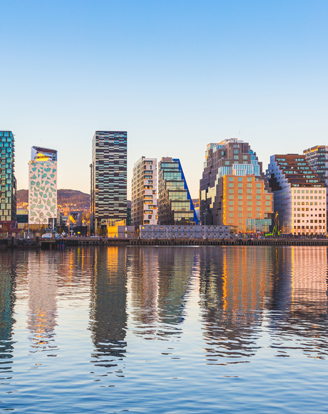
- Bjørvika — The redeveloped harbour district around the Opera House and Munch Museum, handy for culture lovers and rail connections.
- Grünerløkka — A relaxed, creative neighbourhood of cafés, vintage shops and bars, popular with younger travellers.
- Frogner — An elegant residential district near Vigeland Sculpture Park, ideal for a quieter stay.
Travel tips
- Getting around — Trams, buses, the metro and local ferries share one ticketing system. Buy your ticket before boarding, using the official app or a ticket machine, as inspections are common.
- Payment — Norway is one of the most cashless countries in the world. Cards and mobile payments are accepted almost everywhere, and some places no longer take cash.
- Tipping — Service is included and tipping is not expected, though rounding up or leaving a little extra for good service is appreciated.
- Weather — Conditions can change quickly, even in summer. Pack layers and a waterproof jacket, and warm boots with good grip in winter.
- Alcohol — Wine and spirits are sold only in state-run shops with limited opening times, while supermarkets sell beer only.
- Entry requirements — Norway is part of the Schengen area. Visa and entry rules depend on your nationality, so check official sources before you travel.
Frequently asked questions
What is the best time to visit Oslo?
May to September offers mild weather and very long days, ideal for the waterfront, islands and forests. Visit between December and March if you want snow and winter sports close to the city.
Which airport serves Oslo?
Oslo is served by Oslo Airport, Gardermoen (OSL), located around 50 kilometres north of the city centre. It is Norway’s main international airport and is well connected to the city by rail.
How do I get from the airport to the city centre?
Airport express trains reach Oslo Central Station in around 20 minutes, and regional trains take about 25 minutes. Express buses take 40 to 60 minutes, while a taxi takes around 45 minutes.
What currency is used in Oslo?
Oslo uses the Norwegian krone (NOK). Norway is highly cashless, so cards and mobile payments are accepted almost everywhere, and you may rarely need to carry cash.
Do I need a visa to visit Norway?
Visa requirements depend on your nationality and the purpose of your trip. Norway is part of the Schengen area; check official government sources or the IATA Travel Centre for the latest entry requirements before travelling.
Can I see the Northern Lights from Oslo?
The Northern Lights are only rarely visible from Oslo because of its southern location and city lights. For the best chances, travel to northern Norway between late September and March, when nights are long and dark.
Updated: