




Top things to do in Paris
Paris rewards both first-time visitors and returning travellers, with famous landmarks sitting alongside quieter squares and gardens.
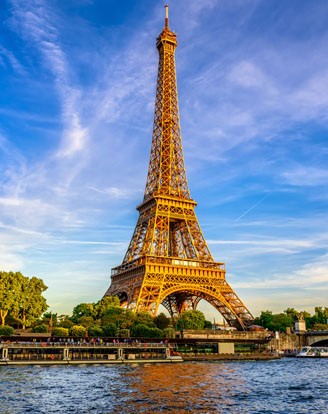
- Eiffel Tower — Head up for sweeping views, or relax on the Champ de Mars below and watch the tower sparkle after dark.
- The Louvre — One of the world's largest art museums, home to the Mona Lisa and the Venus de Milo.
- Notre-Dame and the Île de la Cité — Admire the Gothic cathedral and the stained glass of nearby Sainte-Chapelle.
- Musée d'Orsay — A former railway station filled with Impressionist masterpieces by Monet, Renoir and Van Gogh.
- Montmartre — Climb the hill to the Sacré-Cœur Basilica and explore the artists' streets around Place du Tertre.
- The Seine — Stroll the riverbanks, browse the booksellers' stalls or take a boat trip past the city's monuments.
- Palace of Versailles — An easy day trip to the lavish royal palace and its formal gardens.
Best time to visit Paris
Paris has a temperate climate with mild springs, warm summers, cool autumns and chilly winters. Spring, from April to June, and early autumn, from September to October, are often considered the best times to visit, with pleasant weather for walking and fewer crowds than midsummer.
July and August are warm and busy with visitors. Winter is cold and can be grey, but it is a quieter time for museums, and the city is beautifully lit for the festive season.
Getting from the airport
Paris Charles de Gaulle Airport (CDG) is about 25 km north-east of central Paris. The RER B suburban train links the airport with stations including Gare du Nord and Châtelet-Les Halles, and airport buses run to central Paris. Official taxis and ride-hailing services are available outside the terminals.
Where to stay
Paris is divided into 20 districts called arrondissements, and staying close to a metro station makes it easy to get around.
- Le Marais — Historic streets, museums, boutiques and lively cafés in the heart of the city.
- Saint-Germain-des-Prés — A classic Left Bank area of literary cafés, galleries and elegant shopping.
- Latin Quarter — Lively and central, near the Sorbonne, Notre-Dame and the Luxembourg Gardens.
- Montmartre — Village-like charm and hilltop views, a little further from the centre.
Travel tips
- Money — Cards and contactless payments are widely accepted, though small shops and markets may prefer cash.
- Getting around — The metro, RER trains and buses reach almost everywhere, and many sights are within walking distance of each other.
- Etiquette — Greet shopkeepers and staff with a simple "Bonjour" when you enter; it goes a long way.
- Book ahead — Popular museums and monuments often require timed tickets, especially in peak season.
- Safety — Paris is generally safe, but pickpockets operate on the metro and around major sights.
- Before you go — Check current entry requirements for France before you travel.
Frequently asked questions
What is the best time to visit Paris?
April to June and September to October are the best times to visit Paris, with mild weather and fewer crowds than midsummer.
Which airport serves Paris?
Paris Charles de Gaulle Airport (CDG), about 25 km north-east of the city centre, is the city's main international airport.
How do I get from Charles de Gaulle Airport to central Paris?
The RER B train connects the airport with central Paris stations such as Gare du Nord and Châtelet-Les Halles. Airport buses, official taxis and ride-hailing services are also available.
What currency is used in Paris?
Paris uses the euro (EUR). Cards and contactless payments are accepted in most places.
Do I need a visa to visit France?
Entry requirements depend on your nationality and change from time to time. Check the latest requirements with RwandAir's travel requirements tool or the official government website before you travel.
How many days do I need in Paris?
Three to four days is enough to see the main sights of Paris at a comfortable pace. A longer stay leaves time for more museums, neighbourhoods and a day trip to Versailles.
Updated: