




Top things to do in Porto
Porto’s historic centre is compact but hilly, so comfortable shoes are essential for exploring its lanes, viewpoints and riverfront.
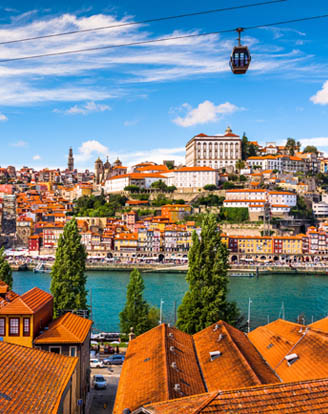
- Ribeira — The colourful riverside quarter, with narrow alleys, terraces and boats moored along the Douro; the heart of the UNESCO-listed old town.
- Dom Luís I Bridge — A striking double-deck iron bridge linking Porto with Vila Nova de Gaia, with superb views from its upper level.
- Port wine cellars — Across the river in Vila Nova de Gaia, historic lodges offer tours and tastings of the city’s famous fortified wine.
- São Bento railway station — Its entrance hall is decorated with thousands of blue-and-white azulejo tiles depicting scenes from Portuguese history.
- Clérigos Tower — A baroque bell tower that rises above the city centre, with panoramic views from the top after a steep climb.
- Porto Cathedral — A fortress-like Romanesque cathedral on a hilltop, with a Gothic cloister and views over the rooftops.
- Foz do Douro — The seaside district where the river meets the Atlantic, with promenades, beaches and seafood restaurants.
Best time to visit Porto
Late spring to early autumn, from May to October, brings the warmest and driest weather, ideal for riverside dining, city walks and trips along the coast. Summer temperatures are usually warm rather than hot, thanks to Atlantic breezes, although mornings can be misty.
The biggest celebration of the year is the Festa de São João on the night of 23 to 24 June, when the city fills with street parties, grilled sardines, music and fireworks over the Douro. September and early October are harvest time in the Douro Valley, a lovely period for vineyard visits.
Winter, from November to March, is mild but often wet and grey, with frequent Atlantic rain. It is the quietest season, with fewer visitors at the main sights, and a good time for museums, cafés and port wine tastings indoors.
Getting from the airport
Porto Airport lies around 11 kilometres north-west of the city centre and is well connected by metro, bus and road.
- Metro — Line E, the violet line, runs from the station beside the terminal to central stops such as Trindade in around 30 minutes, where you can change to other lines for the historic centre.
- Bus — City buses link the airport with the centre, including a night service, taking around 40 to 60 minutes depending on traffic.
- Taxi and ride-hailing — Taxis wait outside arrivals. The drive to the centre usually takes 20 to 30 minutes and is the most convenient option with heavy luggage.
Metro tickets are sold on rechargeable cards from machines at the station; keep the card for later journeys around the city and validate it each time you travel.
Where to stay
Most visitors stay in or near the historic centre, but remember that Porto is hilly, so check how steep the walk is from your accommodation.
- Ribeira — Right on the river, full of atmosphere and restaurants; ideal for first-time visitors who do not mind crowds.
- Baixa — The lively downtown around Avenida dos Aliados, with good metro links and easy walking to most sights.
- Cedofeita and Bombarda — A creative area with galleries, independent shops and cafés, suited to those seeking a local feel.
- Vila Nova de Gaia — Across the river, with views of Porto’s skyline and the port wine lodges on the doorstep.
- Foz do Douro — A relaxed seaside district for travellers who prefer beaches and ocean walks, linked to the centre by bus and tram.
Travel tips
- Getting around — The metro, buses and historic trams cover the city, but walking is often quickest in the centre. Expect steep streets, stairs and slippery cobblestones when wet.
- Petiscos and couvert — Bread, olives and small starters placed on the table are usually charged if eaten; simply send them back if you do not want them.
- Local food — Try the francesinha, a hearty meat sandwich with sauce, grilled fish and custard tarts, known as pastéis de nata.
- Tipping — Tipping is modest in Portugal; rounding up or leaving around 5 to 10 percent for good service is appreciated.
- Safety — Porto is generally safe, but watch for pickpockets in crowded areas, on trams and at viewpoints.
- Entry requirements — Visa and entry rules depend on your nationality. Check the latest requirements with official sources before you travel.
Frequently asked questions
What is the best time to visit Porto?
May to October offers the warmest, driest weather, with June bringing the lively São João festival and September the Douro wine harvest. Winter is mild but often rainy and much quieter.
Which airport serves Porto?
Porto is served by Porto Airport – Francisco Sá Carneiro (OPO), located around 11 kilometres north-west of the city centre. It is linked to the city by metro, bus and taxi.
How do I get from the airport to the city centre?
Metro line E runs from the airport to central stops such as Trindade in around 30 minutes. City buses take around 40 to 60 minutes, and a taxi usually reaches the centre in 20 to 30 minutes.
What currency is used in Porto?
Porto uses the euro (EUR), like the rest of Portugal. Cards are widely accepted, but it is worth carrying some cash for small cafés, bakeries and traditional taverns.
Do I need a visa to visit Portugal?
Visa requirements depend on your nationality and the purpose of your trip. Please check official government sources or the IATA Travel Centre for the latest entry requirements before travelling.
Can I visit the Douro Valley from Porto?
Yes. The Douro Valley’s terraced vineyards can be visited on a day trip by train, car or organised tour, and river cruises also depart from Porto. Allow a full day, as the wine region lies well inland.
Updated: