




Top things to do in Prague
Prague’s historic core is compact and best explored on foot, with trams and the metro linking the main districts on both sides of the river.
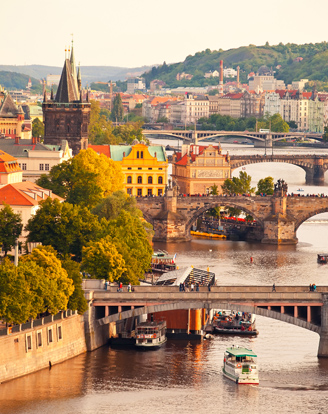
- Charles Bridge — The city’s iconic medieval stone bridge, lined with baroque statues and best enjoyed early in the morning before the crowds arrive.
- Prague Castle — One of the largest castle complexes in the world, home to St Vitus Cathedral, royal palaces and the picturesque Golden Lane.
- Old Town Square — A grand square framed by Gothic and baroque buildings, where crowds gather to watch the medieval Astronomical Clock strike the hour.
- Josefov — The historic Jewish Quarter, with centuries-old synagogues and the atmospheric Old Jewish Cemetery.
- Malá Strana — The Lesser Town below the castle, full of baroque palaces, hidden gardens and quiet cobbled streets.
- Petřín Hill — A green hill with orchards, rose gardens and a lookout tower offering panoramic views over the red rooftops.
- Vyšehrad — A historic fortress on a cliff above the Vltava, with a striking basilica and a cemetery where many famous Czechs are buried.
Best time to visit Prague
Spring, from April to June, and early autumn, in September and October, offer mild weather, blooming or golden parks and fewer crowds than summer. The Prague Spring international music festival fills concert halls in May and June.
July and August are warm and lively, with beer gardens and riverside terraces in full swing, but the historic centre is at its busiest. Book accommodation early for this period.
Winter is cold and often grey, with occasional snow. From late November, Christmas markets on the Old Town Square and Wenceslas Square bring mulled wine, crafts and festive lights, while January and February are the quietest months to visit.
Getting from the airport
Václav Havel Airport Prague lies around 17 kilometres west of the city centre. There is no direct rail link, but buses connect with the metro and main railway station.
- Bus and metro — City buses run frequently from the terminals to metro stations on line A and line B. Including the metro ride, reaching the centre takes around 35 to 45 minutes.
- Airport express bus — A dedicated express bus links the airport with Prague’s main railway station in around 35 minutes, depending on traffic.
- Taxi — Use the official taxi stands at the terminals or a ride-hailing app. The drive to the centre usually takes 25 to 35 minutes.
Public transport tickets are valid on buses, trams and the metro and can be bought from machines at the airport or through the official app. Validate paper tickets when you first board.
Where to stay
Prague is compact and easy to navigate by tram and metro, so choose a district based on the atmosphere you prefer.
- Old Town (Staré Město) — Ideal for first-time visitors who want to be steps from the Old Town Square, Charles Bridge and the Jewish Quarter.
- Malá Strana — Romantic and quieter in the evenings, suited to couples who want to stay below the castle.
- New Town (Nové Město) — Centred on Wenceslas Square, convenient for transport, shopping and a wide range of accommodation.
- Vinohrady — An elegant residential area with leafy squares, cafés and wine bars, popular with travellers who like a local feel.
- Karlín — A revitalised riverside district with restaurants and modern hotels, good for business travellers.
Travel tips
- Getting around — Trams, the metro and buses share one ticketing system. Validate paper tickets on first use, as inspectors carry out frequent checks.
- Currency — The Czech Republic uses the koruna, not the euro. Avoid street money changers, and when paying by card choose to pay in koruna for a better rate.
- Tipping — Around 10 percent is customary in restaurants for good service, usually by telling the waiter the total you wish to pay.
- Taxis — Use official taxi stands or ride-hailing apps rather than hailing cars in tourist areas.
- Comfortable shoes — Cobbled streets and hilly areas around the castle make sturdy footwear essential.
- Entry requirements — The Czech Republic is part of the Schengen area. Visa and entry rules depend on your nationality, so check official sources before you travel.
Frequently asked questions
What is the best time to visit Prague?
April to June and September to October offer mild weather and fewer crowds than summer. December is also popular for the Christmas markets on the Old Town Square, though it is cold and busy.
Which airport serves Prague?
Prague is served by Václav Havel Airport Prague (PRG), located around 17 kilometres west of the city centre. It is the Czech Republic’s main international airport, linked to the city by bus, metro and taxi.
How do I get from the airport to the city centre?
City buses connect the airport with metro lines A and B, reaching the centre in around 35 to 45 minutes in total. An express bus runs to the main railway station, and a taxi takes about 25 to 35 minutes.
What currency is used in Prague?
Prague uses the Czech koruna (CZK), not the euro. Cards are widely accepted; avoid street money changers and choose to pay in koruna when using a card to avoid poor exchange rates.
Do I need a visa to visit the Czech Republic?
Visa requirements depend on your nationality and the purpose of your trip. The Czech Republic is part of the Schengen area; check official government sources or the IATA Travel Centre for the latest entry requirements before travelling.
Is Prague easy to explore on foot?
Yes. The Old Town, Charles Bridge, Malá Strana and the castle are all within walking distance of each other, though the climb to the castle is steep. Trams are an easy option for longer distances.
Updated: