




Top things to do in Rome
Rome rewards slow exploration, with world-famous monuments around almost every corner of its historic centre.
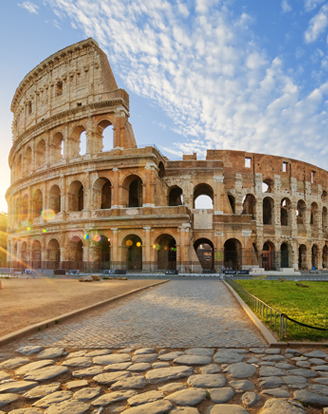
- Colosseum and Roman Forum — The great amphitheatre of ancient Rome and the ruins of the city’s political heart, best visited together with the Palatine Hill. Book timed entry in advance.
- Vatican Museums and Sistine Chapel — One of the world’s greatest art collections, culminating in Michelangelo’s ceiling frescoes in the Sistine Chapel.
- St Peter’s Basilica — The vast Renaissance church in Vatican City, with Michelangelo’s Pietà and a dome that can be climbed for sweeping views.
- Pantheon — A remarkably preserved ancient temple crowned by a huge concrete dome with an open oculus at its centre.
- Trevi Fountain — Rome’s most famous baroque fountain; tradition says tossing a coin over your shoulder ensures a return visit.
- Piazza Navona and the Spanish Steps — Elegant squares and landmarks perfect for people-watching, day or night.
- Trastevere — A charming district of cobbled lanes, ivy-covered houses and busy trattorias across the River Tiber.
Best time to visit Rome
Spring (April to June) and autumn (September to October) are the most pleasant seasons, with warm, sunny days that are ideal for walking between monuments. These are also popular periods, so expect crowds at the major sights and book key attractions ahead. Easter week is especially busy, as many pilgrims come to the Vatican.
Summer (July and August) is hot and often very sunny, with temperatures that can make midday sightseeing tiring. Around the Ferragosto holiday in mid-August many locals leave the city, and some family-run shops and restaurants close for a break. Plan early starts, rest in the afternoon and carry water.
Winter (November to March) is mild compared with northern Europe, though rain is common. It is the quietest time for museums and archaeological sites, and the Christmas period brings nativity scenes and a festive market in Piazza Navona. Opening arrangements can change around religious holidays, so check before you go.
Getting from the airport
Leonardo da Vinci–Fiumicino Airport, Rome’s main international airport, lies near the coast about 30 km southwest of the city centre. It has good rail and road links to the capital.
- Leonardo Express train — A non-stop train runs from the airport station to Roma Termini, the city’s main railway station, in around 30 minutes. From Termini you can connect to the metro, buses and taxis.
- Regional train — Slower regional trains stop at several city stations, including Trastevere and Tiburtina, which can be convenient depending on where you are staying.
- Bus — Coach services link the airport with Termini and other central points in around 45–60 minutes, depending on traffic.
- Taxi — Official white taxis wait at the rank outside arrivals, and the ride to the historic centre usually takes 40–50 minutes. Use only the official rank.
Validate train tickets before boarding if required, as inspectors check regularly and fines apply.
Where to stay
Staying in or near the historic centre lets you walk to most of Rome’s sights and enjoy the city in the early morning and evening, when it is at its most atmospheric. Many buildings are old, so rooms can be small and lifts are not always available.
- Centro Storico — Around the Pantheon, Piazza Navona and Campo de’ Fiori; ideal for first-time visitors who want to be in the middle of everything.
- Trastevere — Picturesque and lively, with plenty of restaurants and bars; suits couples and travellers who enjoy evenings out, though it can be noisy at night.
- Monti — A stylish, village-like district near the Colosseum, with boutiques and wine bars; good for those who want character and a central base.
- Prati — An elegant, calmer residential area close to the Vatican, with wide streets and good metro links; great for families.
- Around Termini — Very practical for the airport train and day trips, with many accommodation options, though less charming than the centre.
Travel tips
- Dress code for churches — Shoulders and knees should be covered in St Peter’s Basilica, the Vatican Museums and most churches. Carrying a light scarf is an easy solution in summer.
- Book ahead — Reserve timed entry for the Colosseum, the Vatican Museums and the Borghese Gallery, especially in high season, to avoid long queues or sold-out days.
- Getting around — The centre is best explored on foot; the metro, buses and trams cover longer distances. Wear comfortable shoes for cobblestones and hills.
- Eating and tipping — A small cover charge (coperto) is common in restaurants. Tipping is not expected, but rounding up or leaving a little for good service is appreciated.
- Safety — Rome is generally safe, but pickpockets operate on crowded buses, the metro and around major sights. Keep valuables secure and be wary of street distractions.
- Entry requirements — Check passport, visa and entry rules for your nationality with official sources before you travel, as requirements can change.
Frequently asked questions
What is the best time to visit Rome?
April to June and September to October offer warm, pleasant weather for sightseeing. Summer is hot and busy, while winter is mild, quieter and a good time for museums, though rain is more common.
Which airport serves Rome?
Rome’s main international gateway is Leonardo da Vinci–Fiumicino Airport (FCO), located near the coast about 30 km southwest of the city centre, with direct rail links to the city.
How do I get from the airport to the city centre?
The non-stop Leonardo Express train reaches Roma Termini in around 30 minutes. Regional trains, airport coaches and official white taxis, taking about 40–50 minutes, are also available.
What currency is used in Rome?
Italy uses the euro (EUR). Cards are widely accepted in hotels, shops and most restaurants, but it is useful to carry some cash for small cafés, markets and kiosks.
Do I need a visa to visit Italy?
Visa requirements depend on your nationality and the purpose of your trip. Check official government sources or the IATA Travel Centre for the latest rules before travelling.
What should I wear to visit the Vatican and churches?
Cover your shoulders and knees when visiting St Peter’s Basilica, the Vatican Museums and Rome’s churches. Avoid sleeveless tops and short shorts, and carry a light scarf in hot weather.
Updated: