




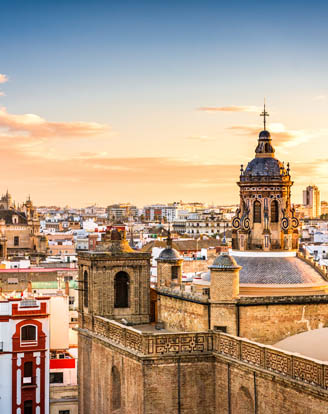
Seville’s historic centre is one of the largest in Europe and a joy to explore on foot.
- Seville Cathedral and the Giralda — One of the world’s largest Gothic cathedrals; climb the former minaret for views across the city.
- Real Alcázar — A royal palace of intricate Mudéjar courtyards, tiles and fountains, with beautiful gardens.
- Plaza de España — A grand semicircular plaza of tiled alcoves and bridges in María Luisa Park.
- Barrio Santa Cruz — The old Jewish quarter’s whitewashed lanes, patios and tiny squares.
- Metropol Parasol — A giant modern wooden structure, known locally as Las Setas, with a rooftop walkway.
- Triana — The riverside district famed for ceramics, its market and flamenco heritage.
- Flamenco — Watch a live performance in an intimate tablao or cultural centre.
Seville has one of the hottest climates in Europe. Summers, especially July and August, are extremely hot, often well above 35°C, while winters are mild and mostly sunny, with some rain.
Spring, from March to May, is the most popular season, when orange blossom scents the air and the city celebrates Semana Santa (Holy Week) and the Feria de Abril, both long-established festivals; book well ahead for these. Autumn, from October to November, is also pleasant with fewer crowds. If visiting in summer, sightsee early and late, and rest in the afternoon heat.
Seville Airport lies about 10 km north-east of the city centre.
A dedicated airport bus connects the terminal with key points in the centre, including the Santa Justa railway station and the Plaza de Armas bus station. Taxis wait outside arrivals and are a convenient choice for groups or late arrivals, and ride-hailing apps also operate. Car hire is available, although driving and parking in the historic centre can be difficult. Journey times into town are usually short.
Most visitors stay in or near the historic centre, within walking distance of the main monuments.
- Santa Cruz — Charming lanes beside the cathedral and Alcázar; ideal for first-time visitors.
- El Arenal and Centro — Central and lively, with tapas bars, shopping and the bullring nearby.
- Triana — Across the river, with authentic local character, ceramics workshops and flamenco.
- Alameda de Hércules — A bohemian area with bars, cafés and nightlife.
- Money: Cards are widely accepted, even in many tapas bars; carry some cash for small purchases.
- Getting around: The centre is best explored on foot; trams, buses, a metro line and city bikes cover longer distances.
- Timing: Spaniards eat late, with lunch from around 2 pm and dinner often after 9 pm.
- Heat: In summer, drink plenty of water, wear a hat and avoid sightseeing in the midday heat.
- Tickets: Book the Alcázar and cathedral in advance, especially in spring, to avoid long queues.
Frequently asked questions
Which airport serves Seville?
Seville is served by Seville Airport (SVQ), about 10 km north-east of the city centre.
How do I get from the airport to the city centre?
Take the airport bus, a taxi or a ride-hailing car. The journey is short.
What currency is used in Seville?
Spain uses the euro (EUR). Cards are widely accepted.
Do I need a visa to visit Seville?
Entry requirements depend on your nationality and can change. Check RwandAir’s travel requirements tool or the official government website before travelling.
When is the best time to visit Seville?
March to May and October to November are ideal. Summers are extremely hot.
What is the Feria de Abril?
It is Seville’s famous spring fair, held a couple of weeks after Holy Week, with decorated marquees, flamenco dresses, horses and dancing late into the night.
Updated: