




Top things to do in Stockholm
With water on every side, Stockholm is best explored on foot, by ferry and on its famously artistic metro, combining history, nature and design in one compact city.
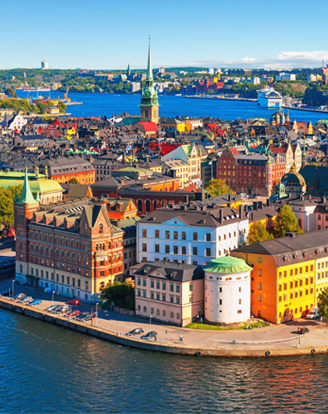
- Gamla Stan — The beautifully preserved old town, with narrow cobbled lanes, ochre-coloured merchants’ houses and the lively square of Stortorget.
- Vasa Museum — Home to a remarkably intact 17th-century warship that sank on its maiden voyage, one of Scandinavia’s most visited museums.
- Royal Palace — One of Europe’s largest palaces still in official use, with state apartments, museums and the daily changing of the guard.
- Skansen — The world’s oldest open-air museum, on the island of Djurgården, showcasing historic Swedish buildings, crafts and Nordic animals.
- Stockholm City Hall — The waterfront landmark famous for its Golden Hall and as the venue for the annual Nobel Prize banquet, with views from its tower.
- Stockholm Archipelago — Take a ferry or boat tour to some of the many islands for rocky shores, wooden villages and summer swimming.
- Fjällgatan viewpoint on Södermalm — A historic street on the cliffs of Södermalm offering one of the best panoramic views across the city and harbour.
Best time to visit Stockholm
Late spring and summer, from May to September, are the best time to visit. Days are extraordinarily long, with only a few hours of twilight around midsummer, and Stockholmers head outdoors to parks, waterfront terraces, open-air swimming spots and the archipelago. July and August are the warmest months, and also when many locals take their holidays.
Midsummer, celebrated on the Friday between 19 and 25 June, is one of Sweden’s most cherished holidays, with maypole dancing, flower crowns and traditional food; many Swedes leave the city for the countryside, so some businesses close. September brings crisp air, autumn colours and fewer crowds.
Winter is cold and dark, with short days, but Stockholm is atmospheric under snow, with Christmas markets in Gamla Stan and at Skansen during Advent and candlelit Lucia celebrations on 13 December. January to March is the quietest period, ideal for museums, design shops and ice skating when the lakes freeze.
Getting from the airport
Stockholm Arlanda Airport lies around 40 kilometres north of the city centre. Several fast and frequent options link the terminals with Stockholm Central Station and other parts of the city.
- Airport express train — A dedicated high-speed train runs from stations beneath the terminals to Stockholm Central Station in around 20 minutes, the quickest way into the city.
- Commuter and regional trains — Commuter trains and some regional trains also stop at the airport’s main railway station, reaching the city centre in around 20 to 40 minutes, depending on the service.
- Airport coaches — Coaches run from the terminals to the central bus terminal next to Central Station in around 40 to 45 minutes, with some stops along the way.
- Taxi — Taxis wait outside each terminal, and the drive to the centre usually takes 35 to 45 minutes. Use the official ranks and check the displayed fare information before you set off.
Trains and coaches run from early morning until late at night, and card payment is accepted for tickets at machines and on board many services.
Where to stay
Stockholm’s islands and districts are well connected by metro, buses, trams and ferries, so it is easy to explore the whole city from almost any neighbourhood. Choose based on the atmosphere you prefer.
- Norrmalm — The modern city centre around Central Station, with department stores and easy airport connections, ideal for first-time visitors and short stays.
- Gamla Stan — The romantic old town, perfect for travellers who want to wake up among cobbled lanes and historic buildings.
- Södermalm — A creative, bohemian island with vintage shops, cafés, bars and city views, popular with younger travellers and those seeking a local feel.
- Östermalm — An elegant, upmarket district with grand boulevards, a historic food hall and fine dining, suited to couples and luxury travellers.
- Kungsholmen — A calm residential island with waterfront walks near City Hall, a good choice for families and longer stays.
Book early for summer and the Christmas season, when central hotels fill quickly.
Travel tips
- Getting around — The metro, buses, trams and many inner-city ferries share one ticket system. Many metro stations are decorated with art, so the network doubles as an underground gallery.
- Payment — Sweden is one of the most cashless countries in the world. Cards and mobile payments are accepted almost everywhere, and many shops, cafés and transport services do not take cash at all.
- Tipping — Service is included in restaurant prices, so tipping is optional; rounding up or adding a small amount for good service is appreciated.
- Fika — Take time for fika, the Swedish coffee break with pastries such as cinnamon buns, a cherished daily ritual.
- Etiquette — Swedes value punctuality, queueing and personal space. Keep to the right on escalators and speak quietly on public transport.
- Entry requirements — Visa and entry rules depend on your nationality. Check the latest requirements with official sources before you travel.
Frequently asked questions
What is the best time to visit Stockholm?
May to September offers long, bright days, mild weather and easy access to the archipelago, with Midsummer celebrations in late June. December is also lovely for Christmas markets and Lucia celebrations.
Which airport serves Stockholm?
Stockholm’s main international gateway is Stockholm Arlanda Airport (ARN), located around 40 kilometres north of the city centre. It is Sweden’s largest airport and is linked to the city by fast trains.
How do I get from the airport to the city centre?
The airport express train reaches Stockholm Central Station in around 20 minutes. Commuter trains take around 20 to 40 minutes, airport coaches around 45 minutes, and a taxi around 35 to 45 minutes.
What currency is used in Stockholm?
Sweden uses the Swedish krona (SEK), not the euro. Cards and mobile payments are accepted almost everywhere, and many businesses do not accept cash, so a payment card is the easiest way to pay.
Do I need a visa to visit Sweden?
Visa requirements depend on your nationality and the purpose of your trip. Please check official government sources or the IATA Travel Centre for the latest entry requirements before travelling.
Is Stockholm a cashless city?
Almost. Stockholm is one of the most cashless cities in the world, and many shops, cafés and transport services accept only cards or mobile payments. Bring a card that works abroad, ideally with contactless payment.
Updated: