



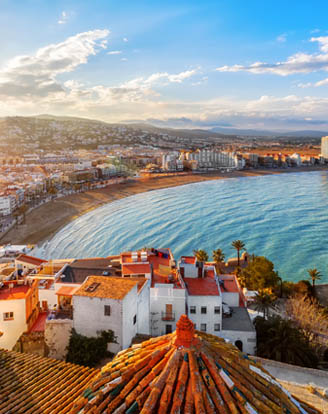
Valencia is flat, sunny and easy to explore on foot or by bike.
- City of Arts and Sciences — A futuristic complex with a science museum, opera house and Europe’s largest aquarium, L’Oceanogràfic.
- Turia Gardens — A long green park laid out in a former riverbed, perfect for cycling and jogging.
- Valencia Cathedral — Climb the Miguelete bell tower and see the chapel that holds a chalice venerated as the Holy Grail.
- La Lonja de la Seda — A UNESCO-listed Gothic silk exchange in the old town.
- Central Market — One of Europe’s largest fresh food markets, housed in a Modernist building.
- Malvarrosa and Las Arenas beaches — Wide urban beaches with a seafront promenade.
- Albufera Natural Park — A lagoon surrounded by rice fields, where traditional paella is said to have originated.
Valencia enjoys a mild Mediterranean climate with many sunny days a year. Spring and autumn offer warm, pleasant weather for sightseeing and beach walks, while summer is hot and humid and ideal for sea swimming.
March brings the famous Fallas festival, recognised by UNESCO, when giant satirical sculptures fill the streets before being burned on the final night amid fireworks. Winters are mild and fairly dry, making Valencia a good off-season city break. Book accommodation early if you plan to visit during Fallas.
Valencia Airport is located in Manises, about 8 km west of the city centre. Metro lines connect the airport directly with central stations, providing an easy link to the old town and the main railway stations.
Buses also run to the city, and taxis wait outside arrivals. Ride-hailing services are available too. Journey times into the centre are short, making Valencia one of the more convenient Spanish cities to reach from its airport.
Valencia is compact, and most districts are well linked by metro, tram and bus.
- Ciutat Vella (Old Town) — Historic streets, the cathedral and the market; ideal for first-time visitors.
- El Carmen — Part of the old town with street art, bars and a bohemian vibe; suits younger travellers.
- Ruzafa — A trendy area of cafés, restaurants and independent shops, popular with food lovers.
- Cabanyal and the beach — A former fishing quarter near the sea, good for families and beach lovers.
- Money: Cards are widely accepted, though small bars and market stalls may prefer cash.
- Getting around: The metro, trams and buses cover the city well, and the flat terrain and bike lanes make cycling easy.
- Etiquette: Lunch is the main meal and is eaten late; paella is traditionally a lunchtime dish.
- Sun: The sun is strong for much of the year, so bring sunscreen, a hat and water.
- Language: Spanish and Valencian are both used; many signs appear in both languages.
Frequently asked questions
Which airport serves Valencia?
Valencia is served by Valencia Airport (VLC) in Manises, about 8 km west of the city centre.
How do I get from the airport to the city centre?
The metro runs directly from the airport to the centre, and buses, taxis and ride-hailing are also available.
What currency is used in Valencia?
Spain uses the euro (EUR). Cards are widely accepted, and cash machines are easy to find.
Do I need a visa to visit Valencia?
Entry requirements depend on your nationality and can change. Check RwandAir’s travel requirements tool or the official government website before travelling.
When is the best time to visit Valencia?
March to June and September to October offer warm, pleasant weather. Summer is hot and good for the beach.
What is the Fallas festival?
Las Fallas is Valencia’s best-known festival, held in March. Neighbourhoods build huge artistic sculptures that are displayed in the streets and then burned on the final night, with fireworks and parades throughout.
Updated: