




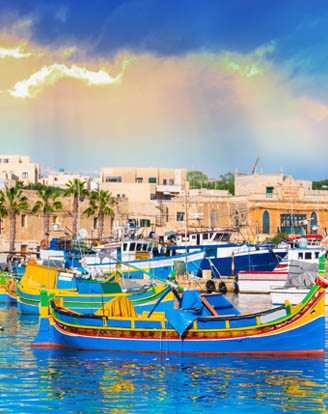
Malta packs thousands of years of history and plenty of sea and sun into a small area.
- Valletta — The UNESCO-listed fortified capital, with honey-coloured streets and views from the Upper Barrakka Gardens over the Grand Harbour.
- St John’s Co-Cathedral — A dazzling baroque interior housing Caravaggio’s ‘The Beheading of Saint John the Baptist’.
- Mdina — The hilltop ‘Silent City’, a walled medieval town of quiet lanes and palaces.
- Megalithic temples — Visit prehistoric sites such as Ħaġar Qim and Mnajdra, among the oldest free-standing structures in the world.
- Ħal Saflieni Hypogeum — An underground prehistoric burial complex; visitor numbers are limited, so book well in advance.
- The Three Cities — Historic harbour towns across from Valletta, reached by a short ferry ride.
- Gozo and Comino — Take a ferry to rural Gozo, or a boat to Comino’s turquoise Blue Lagoon.
Malta has a Mediterranean climate with hot, dry summers and mild, wetter winters. It is one of the sunniest places in Europe, and the sea is warm enough for swimming from around June to October.
April to June and September to October are ideal, combining warm weather, pleasant seas and fewer crowds than July and August, when temperatures and visitor numbers peak. Spring is lovely for walking and sightseeing, and village festas with fireworks and processions take place through the summer months. Winter is mild and quiet, well suited to history and culture.
Malta International Airport is at Luqa, in the south-east of the main island, about 8 km from Valletta. It is the country’s only airport.
Public buses connect the airport with Valletta and other main towns and resorts, and taxis can be booked at the official taxi desk in arrivals. Ride-hailing apps are widely used, and many hotels offer transfers. Car hire is available, but traffic drives on the left and parking in towns can be difficult. Journey times are short, although traffic can slow things down at busy times.
Malta is small, so you can stay in one base and explore the whole island.
- Valletta — History on your doorstep, boutique hotels and harbour views; ideal for culture lovers.
- Sliema — A seafront town with promenades, shopping and ferries to Valletta.
- St Julian’s — Lively resort area with restaurants, bars and nightlife.
- Gozo — The quieter, greener sister island, perfect for a slower pace and diving.
- Money: Malta uses the euro; cards are widely accepted, but carry some cash for small shops and buses.
- Getting around: Buses cover the islands, ferries link Valletta with Sliema and the Three Cities, and a ferry runs to Gozo.
- Driving: Traffic drives on the left, and roads can be narrow and busy.
- Etiquette: Cover shoulders and knees when visiting churches, including St John’s Co-Cathedral.
- Language: English is an official language, so communication is easy for English speakers.
Frequently asked questions
Which airport serves Malta?
Malta is served by Malta International Airport (MLA) at Luqa, about 8 km from Valletta.
How do I get from the airport to Valletta?
Take a public bus, a taxi from the official desk, a ride-hailing car or a hotel transfer.
What currency is used in Malta?
Malta uses the euro (EUR). Cards are widely accepted.
Do I need a visa to visit Malta?
Entry requirements depend on your nationality and can change. Check RwandAir’s travel requirements tool or the official government website before travelling.
When is the best time to visit Malta?
April to June and September to October offer warm weather and a pleasant sea without the peak summer crowds.
How do I get to Gozo from Malta?
A regular car and passenger ferry runs from Ċirkewwa, at the northern tip of Malta, to Mġarr on Gozo.
Updated: