





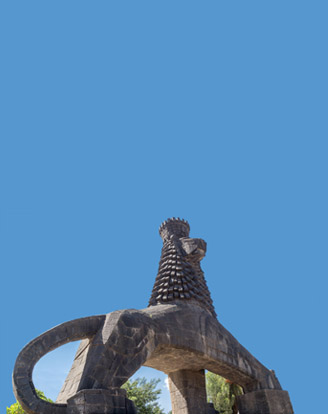
Top things to do in Addis Ababa
Addis Ababa is a large, spread-out city, so most visitors combine short walks with taxi rides between its main sights.
- National Museum of Ethiopia — Best known for its display on Lucy, the 3.2-million-year-old hominid skeleton found in Ethiopia, alongside royal artefacts and Ethiopian art.
- Holy Trinity Cathedral — A major Ethiopian Orthodox cathedral with stained glass and murals, and the burial place of Emperor Haile Selassie and Empress Menen.
- Merkato — Often described as one of the largest open-air markets in Africa, a maze of lanes selling spices, coffee, textiles and household goods.
- Entoto Hills — Forested hills on the city’s northern edge with fresh air, panoramic views and historic churches linked to Emperor Menelik II, who founded the capital.
- Ethnological Museum — Set in Haile Selassie’s former palace on the Addis Ababa University campus, with displays on the customs and crafts of Ethiopia’s many peoples.
- St George’s Cathedral — An octagonal church in the Piassa area, built to commemorate the Ethiopian victory at the Battle of Adwa in 1896.
- Red Terror Martyrs’ Memorial Museum — A moving museum that remembers the victims of the Derg period in the 1970s and 1980s.
Best time to visit Addis Ababa
Addis Ababa’s high altitude keeps temperatures mild all year, with pleasant days and cool evenings. The main dry season, from October to February, brings sunny skies and clear views, and is generally considered the best time to visit.
The main rainy season, known locally as kiremt, runs from around June to September, with frequent heavy showers and cooler, cloudier days. Lighter rains can also fall around March and April, though they rarely disrupt sightseeing for long.
Several major festivals are worth planning around. Meskel, in late September, is celebrated with a huge bonfire in Meskel Square, and Timkat, the Ethiopian Orthodox celebration of Epiphany in January, fills the streets with colourful processions. Ethiopian New Year, Enkutatash, falls in September. Hotels fill up quickly around these dates, so book early.
Getting from the airport
Addis Ababa Bole International Airport lies around 6 kilometres south-east of the city centre, on the edge of the busy Bole district, and is Ethiopia’s main international gateway.
- Taxi — Taxis wait outside the terminal. The drive to the centre usually takes 20 to 40 minutes, depending on traffic. Agree the fare before setting off if the vehicle has no meter.
- Ride-hailing apps — Local ride-hailing services operate across the city and are popular with visitors, as the fare is shown before the trip.
- Hotel transfer — Many hotels offer airport pick-ups, a convenient option for late-night arrivals or first-time visitors.
- Minibus — Shared minibuses run along the main roads near the airport, but they are crowded and best suited to travellers with light luggage and some local knowledge.
Traffic can be heavy at peak times, so allow extra time when heading back to the airport for your departure.
Where to stay
Addis Ababa is spread out and traffic can be slow, so choosing a base near the places you plan to visit saves time.
- Bole — Close to the airport, with a wide choice of hotels, restaurants, cafés and nightlife; the most popular area for first-time visitors.
- Kazanchis — A central business district close to several international organisations, convenient for business travellers.
- Piassa — The historic old centre, with early 20th-century buildings, traditional cafés and easy access to St George’s Cathedral; suits travellers interested in history.
- Around Meskel Square — A central location between Bole and the older districts, handy for museums and major festivals.
- Old Airport — A quieter residential area in the south-west with a relaxed feel, popular with long-stay visitors and families.
Travel tips
- Altitude — At around 2,400 metres, the thin air can leave you short of breath at first. Take it easy for the first day or two, drink plenty of water and go easy on alcohol.
- Calendar and clock — Ethiopia uses its own calendar, about seven to eight years behind the Gregorian one, and a traditional clock in which the day starts at around 6am. Check whether times are given in local or international style.
- Payment — The birr is used for everyday purchases. Cards are accepted at larger hotels and some restaurants, but carry cash for markets, taxis and small businesses.
- Etiquette — Dress modestly when visiting churches, where you may be asked to remove your shoes and women often cover their heads. Accepting coffee at a traditional coffee ceremony is a warm gesture.
- Travel advice — Conditions can vary between regions of Ethiopia. Check your government’s current travel advice before and during your trip.
- Entry requirements — Visa and entry rules depend on your nationality. Check the latest requirements with official sources before you travel.
Frequently asked questions
What is the best time to visit Addis Ababa?
The dry season from October to February brings sunny days and cool evenings, making it the most comfortable time to visit. Late September and January are especially lively thanks to the Meskel and Timkat festivals.
Which airport serves Addis Ababa?
Addis Ababa is served by Addis Ababa Bole International Airport (ADD), located around 6 kilometres south-east of the city centre. It is Ethiopia’s main international gateway.
How do I get from the airport to the city centre?
Taxis and ride-hailing services are the easiest options, taking around 20 to 40 minutes depending on traffic. Many hotels also offer airport pick-ups, which are convenient for late arrivals.
What currency is used in Addis Ababa?
Ethiopia uses the Ethiopian birr (ETB). Cards are accepted in larger hotels and some restaurants, but cash is needed for markets, taxis and small businesses. Exchange money at banks or official bureaux.
Do I need a visa to visit Ethiopia?
Visa requirements depend on your nationality and the purpose of your trip. Please check official government sources or the IATA Travel Centre for the latest entry requirements before travelling.
Why does Ethiopia use a different calendar?
Ethiopia follows its own ancient calendar, with 13 months and a New Year in September, running about seven to eight years behind the Gregorian calendar. Hotels and businesses serving visitors usually also use international dates.
Updated: