



Top things to do in Geneva
Geneva’s main sights are grouped around the lake and the hilltop old town, and most can be reached on foot or by a short tram, bus or water-taxi ride.
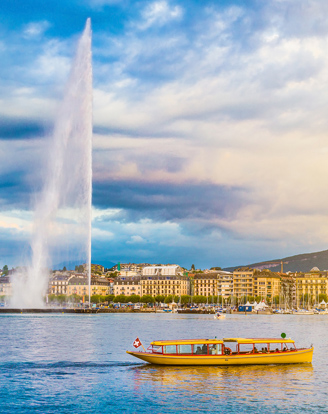
- Jet d’Eau — The city’s famous fountain shoots a plume of water around 140 metres into the air from the lake; walk out along the jetty for a closer look.
- Old Town and St Peter’s Cathedral — Cobbled streets, antique shops and cafés surround the cathedral, whose towers offer sweeping views over the lake and rooftops.
- Palais des Nations — The European headquarters of the United Nations, set in a large park; guided tours are available for visitors with identification.
- International Red Cross and Red Crescent Museum — A moving, interactive museum on the history of humanitarian action.
- English Garden and Flower Clock — A lakeside park beside the old town, known for its large clock made of seasonal flowers.
- Bains des Pâquis — A popular public bathing area on a jetty, loved by locals for summer swimming and relaxed lakeside meals.
- Carouge — A neighbouring town with a Mediterranean feel, colourful low-rise houses, artisan workshops and a weekly market.
Best time to visit Geneva
Late spring and summer, from May to September, are the most popular months. Warm, sunny days are perfect for lake swimming, boat trips, cycling along the shore and excursions to the mountains and vineyards. July and August are the warmest and busiest months, with lively open-air events along the waterfront.
Autumn brings mild weather, the grape harvest in the surrounding countryside and fewer visitors, making it a pleasant time for sightseeing. Geneva is also a major conference city, so hotels can fill up during large international events and trade fairs; booking ahead is wise.
Winter is cool and often grey, and the local north-east wind, known as the bise, can make it feel colder. In December, the Escalade festival commemorates the city’s defence against a surprise attack in 1602 with costumed parades and chocolate cauldrons, and the ski resorts of the Alps are within easy reach. Winter is also a good season for museums and traditional Swiss dishes such as cheese fondue.
Getting from the airport
Geneva Airport lies only around 4 kilometres north-west of the city centre, making it one of the most conveniently located airports in Europe.
- Train — Frequent trains run from the airport railway station, next to the terminal, to Geneva’s main station, Cornavin, in around 6 to 10 minutes.
- Bus — Several city bus lines connect the airport with the centre and surrounding districts in around 20 to 30 minutes, depending on traffic.
- Taxi — Taxis wait outside the arrivals hall. The drive to the centre usually takes around 15 minutes, longer at rush hour, and is the most expensive option.
Arriving passengers can usually collect a free public transport ticket, valid for a short period, from a machine in the baggage reclaim area. Many hotels also give guests a transport card for free travel on the city network during their stay; ask when you check in. Trains from the airport also run directly to other Swiss cities such as Lausanne.
Where to stay
Geneva is compact and easy to navigate, so the choice of area depends mostly on whether you prefer lakeside views, old-town charm or a local atmosphere.
- Old Town (Vieille Ville) — Ideal for first-time visitors and couples who want historic streets, the cathedral and museums on their doorstep.
- Pâquis — A lively, multicultural district near the main station and lake, with a wide range of restaurants and accommodation for different budgets.
- Eaux-Vives — A residential area on the left bank with lakeside parks, cafés and shops, suited to travellers who want a local feel.
- Carouge — A charming, village-like area south of the centre, known for its boutiques, bars and relaxed evenings.
- International district — Convenient for visitors attending meetings at the United Nations and other international organisations, and close to the airport.
Travel tips
- Getting around — Trams, buses, trains within the city zone and the yellow lake shuttle boats share one ticketing system. Buy or validate your ticket before boarding, as inspections are frequent.
- Payment — Switzerland uses the Swiss franc, not the euro. Cards are accepted almost everywhere; some places accept euros, but change is usually given in francs.
- Tipping — Service is included in prices by law, but rounding up or leaving a little extra for good service is appreciated.
- Crossing into France — The French border is only a few kilometres away, and many locals shop or ski on the French side. Carry your passport or ID when crossing.
- Sundays — Most shops close on Sundays and public holidays, although shops at the main station and airport remain open.
- Entry requirements — Switzerland is part of the Schengen Area but not the European Union. Visa and entry rules depend on your nationality, so check the latest requirements with official sources before you travel.
Frequently asked questions
What is the best time to visit Geneva?
May to September is ideal, with warm weather for lake swimming, boat trips and mountain excursions. Autumn is mild and quieter, while December brings the Escalade festival and easy access to Alpine ski resorts.
Which airport serves Geneva?
Geneva is served by Geneva Airport (GVA), located only around 4 kilometres north-west of the city centre. It has its own railway station next to the terminal and is also close to the French border.
How do I get from the airport to the city centre?
Trains reach Geneva’s main station, Cornavin, in around 6 to 10 minutes. City buses take around 20 to 30 minutes, and a taxi to the centre usually takes about 15 minutes, depending on traffic.
What currency is used in Geneva?
Geneva uses the Swiss franc (CHF), as does the rest of Switzerland. Cards are widely accepted, and while some businesses take euros, change is generally given in Swiss francs.
Do I need a visa to visit Switzerland?
Visa requirements depend on your nationality and the purpose of your trip. Please check official government sources or the IATA Travel Centre for the latest entry requirements before travelling.
What is the Jet d’Eau in Geneva?
The Jet d’Eau is a giant fountain in Lake Geneva that shoots water around 140 metres into the air. It is the city’s best-known landmark and can be seen from many viewpoints around the lake.
Updated: