




Top things to do in Durban
Durban’s long beachfront is the heart of the city, with museums, markets and green hillside suburbs a short drive inland.
- Golden Mile — A long stretch of sandy beaches and a wide seafront promenade, ideal for walking, cycling, surfing and people-watching.
- uShaka Marine World — A large marine park and aquarium at the southern end of the beachfront, with sea life exhibits and water slides for families.
- Moses Mabhida Stadium — Built for the 2010 FIFA World Cup, its sweeping arch offers sweeping views over the city and ocean from the top.
- Victoria Street Market — A lively market reflecting Durban’s large Indian community, known for spices, textiles and crafts.
- Durban Botanic Gardens — Historic gardens founded in the mid-19th century, with ancient cycads, orchids and shady lawns for picnics.
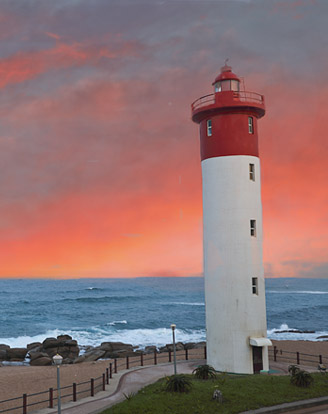
- Umhlanga — An upmarket beach town north of the city with a red-and-white lighthouse, a scenic promenade and plenty of restaurants.
- Valley of a Thousand Hills — A scenic region inland from Durban, with rolling green hills, viewpoints and Zulu cultural experiences.
Best time to visit Durban
Durban has a subtropical climate with warm weather all year. Winter, from around May to August, brings sunny, dry days with comfortable temperatures, making April to September the most pleasant period for sightseeing, beach walks and safaris in the region.
Summer, from November to March, is hot and humid, with most of the year’s rain falling in short afternoon thunderstorms. The sea is at its warmest, and beaches are at their liveliest. In winter, the famous sardine run sometimes brings shoals, dolphins and seabirds close to the KwaZulu-Natal south coast, usually around June and July.
The December and early January holidays are the busiest time on the coast, as are the July school holidays. The Durban July horse race, held on the first Saturday of July, is one of the city’s biggest social events. Book accommodation early for these periods.
Getting from the airport
King Shaka International Airport lies at La Mercy, around 35 kilometres north of central Durban, close to the resort towns of the north coast.
- Airport shuttle bus — Scheduled shuttle buses link the airport with central Durban and Umhlanga. The trip to the city centre takes around 30 to 45 minutes, depending on traffic.
- Taxi and ride-hailing — Metered taxis and ride-hailing services are available outside the terminal. The drive to the centre usually takes 30 to 40 minutes, and to Umhlanga around 20 minutes.
- Car hire — Car rental desks are located in the terminal, a good option for exploring the coast, the Drakensberg or game reserves further afield.
- Hotel transfer — Many hotels and lodges on the north coast arrange airport transfers on request.
There is no rail link to the airport, so allow extra time on the motorway during weekday rush hours.
Where to stay
Most visitors stay near the sea, choosing between the city beachfront and the quieter towns to the north.
- Umhlanga — A popular upmarket area with beaches, a promenade, shopping and restaurants, close to the airport; suits families and business travellers.
- Beachfront and Golden Mile — Convenient for the sea, uShaka Marine World and the stadium, with a wide range of hotels; ideal for beach lovers on a city break.
- Morningside and Berea — Leafy hillside suburbs with guesthouses and lively restaurant streets; good for those who enjoy dining out and a local feel.
- Ballito — A relaxed beach town further up the north coast, suited to longer beach holidays and self-catering stays.
Travel tips
- Beaches — Swim only at beaches with lifeguards and stay between the flags, as currents can be strong. Many main beaches are protected by shark nets.
- Safety — Avoid walking in the city centre and quiet areas after dark, keep valuables out of sight and use ride-hailing or registered taxis at night.
- Payment and tipping — Cards are widely accepted. A tip of around 10 to 15 percent is usual in restaurants, and small tips are customary for petrol attendants and car guards.
- Food — Durban is famous for its Indian-influenced cuisine. Try a bunny chow, a hollowed-out loaf of bread filled with curry, a local speciality.
- Travel advice — Check your government’s current travel advice for South Africa before and during your trip.
- Entry requirements — Visa and entry rules depend on your nationality. Check the latest requirements with official sources before you travel.
Frequently asked questions
What is the best time to visit Durban?
Durban is warm all year. April to September offers mild, sunny and dry weather ideal for sightseeing and safaris, while November to March is hot and humid with afternoon storms and the warmest sea.
Which airport serves Durban?
Durban is served by King Shaka International Airport (DUR), located at La Mercy around 35 kilometres north of the city centre, close to Umhlanga and the resorts of the north coast.
How do I get from the airport to the city centre?
Airport shuttle buses, taxis and ride-hailing services reach central Durban in around 30 to 45 minutes, and Umhlanga in about 20 minutes. Car hire is available in the terminal.
What currency is used in Durban?
Durban uses the South African rand (ZAR). Cards are widely accepted in shops, hotels and restaurants, and cash machines are easy to find. Carry a little cash for tips and market stalls.
Do I need a visa to visit South Africa?
Visa requirements depend on your nationality and the purpose of your trip. Please check official government sources or the IATA Travel Centre for the latest entry requirements before travelling.
Is it safe to swim at Durban’s beaches?
Swimming is popular on Durban’s main beaches, many of which have lifeguards and shark nets. Always swim between the flags when lifeguards are on duty, and follow local warnings about currents and sea conditions.
Updated: