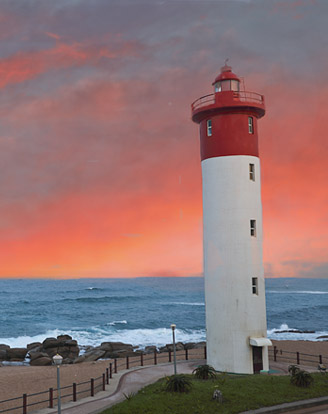





East London blends beach life with history and easy day trips along a scenic coastline.
- East London Museum — Home to the celebrated coelacanth, the “living fossil” fish identified here in 1938, plus natural history and Xhosa cultural displays.
- Nahoon Beach and Reef — A favourite spot for surfers and swimmers, with a boardwalk through coastal dunes and a nature reserve at the river mouth.
- Orient Beach — A sheltered city beach popular with families, close to the beachfront promenade.
- Beachfront Esplanade — Stroll or cycle along the seafront through Quigney, with ocean views and places to eat.
- Gonubie — A seaside suburb with a long beach, a river mouth and a boardwalk.
- Ann Bryant Art Gallery — South African art displayed in a graceful early twentieth-century mansion.
- Wild Coast day trips — Head north to coastal villages such as Chintsa for empty beaches and lagoons.
East London enjoys a mild, subtropical coastal climate with few extremes. Summers, from about November to March, are warm and humid, with most rain falling in summer thunderstorms. Winters, from June to August, are mild and mostly sunny, though cool winds can blow off the sea.
For swimming and beach time, October to April is ideal, when the sea is at its warmest. Sightseeing and nature walks are comfortable all year round, and the shoulder months of spring and autumn are pleasant and quieter, avoiding the busy December holiday season.
King Phalo Airport, formerly known as East London Airport, lies a short drive south-west of the city centre. It is a compact domestic airport, so getting through arrivals is usually quick.
Car hire counters operate in the terminal, and driving is the easiest way to explore the coast and nearby game reserves. Metered taxis and ride-hailing apps are available, and many hotels and guesthouses can arrange transfers if requested in advance.
Choose between beachfront convenience and leafy suburbs, depending on your plans.
- Quigney and the Esplanade — Hotels along the seafront, close to Orient Beach; good for first-time visitors.
- Nahoon and Beacon Bay — Residential suburbs with guesthouses, near Nahoon Beach and shopping centres.
- Vincent and Berea — Central, leafy areas convenient for business travellers.
- Gonubie — A quieter coastal suburb suited to families and longer stays.
- Money: Cards are widely accepted; ATMs are easy to find in shopping centres.
- Getting around: A hire car gives the most freedom; use ride-hailing apps or registered taxis for trips within the city.
- Beach safety: Swim at beaches with lifeguards and between the flags, as currents can be strong.
- Safety: Keep valuables out of sight and avoid walking alone in quiet areas after dark.
- Language: English is widely understood, and isiXhosa is the main home language in the region.
Frequently asked questions
Which airport serves East London?
East London is served by King Phalo Airport (ELS), formerly called East London Airport, a short drive from the city centre.
How do I get from the airport to the city centre?
Car hire, metered taxis, ride-hailing apps and hotel transfers are all available. The journey is short.
What currency is used in East London?
The South African rand (ZAR) is used, and cards are widely accepted.
Do I need a visa to visit South Africa?
Entry requirements depend on your nationality and can change. Check RwandAir’s travel requirements tool or the official government website before travelling.
When is the best time to visit East London?
October to April is best for beach holidays, while the mild climate makes sightseeing pleasant all year.
What is special about the East London coelacanth?
In 1938 a coelacanth, a fish previously thought extinct for millions of years, was identified from a catch near East London. The specimen is displayed at the East London Museum.
Updated: