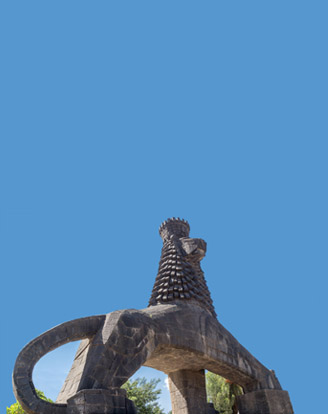




Jimma blends royal history with the relaxed feel of a green highland city surrounded by coffee farms.
- Palace of Abba Jifar — The wooden palace of the 19th-century ruler of the Kingdom of Jimma, on a hill just outside the city, with views over the surrounding countryside.
- Jimma Museum — A small museum with objects linked to the Jimma kingdom and regional culture.
- Coffee country — The south-west is one of Ethiopia’s great coffee regions; visit farms or simply enjoy a traditional coffee ceremony.
- City markets — Busy markets sell coffee, spices, baskets and fresh produce.
- Jimma University area — A lively district that gives the city a youthful atmosphere.
- Kaffa forests — With a guide, travel on towards the forested Kaffa area, associated with the origins of wild coffee.
At around 1,700 metres, Jimma enjoys warm days and mild nights, but it is one of the wetter parts of Ethiopia. Rain can fall for much of the year, with the heaviest showers generally between about June and September.
The drier months from around November to February are the most pleasant for sightseeing and for travelling on rural roads. The coffee harvest in the region generally takes place towards the end of the year, which is an interesting time to see farms at work.
Jimma Aba Segud Airport lies close to the city, a short drive from the centre, and handles domestic flights, mainly to and from Addis Ababa.
Taxis and bajajs (three-wheeled auto-rickshaws) wait for arriving flights, and many hotels can arrange pick-ups in advance. There is no rail or metro link. The journey into town is quick, so a taxi or hotel transfer is the simplest option.
Jimma has a reasonable range of mid-range hotels and guesthouses spread around the centre.
- City centre — Close to markets, restaurants and transport; the most convenient base.
- Near the university — Suits academic visitors and those attending conferences.
- Quieter outskirts — Hotels on the edges of town offer more space and greenery for longer stays.
- Money: Carry birr in cash; cards are accepted only in some larger hotels.
- Getting around: Bajajs are cheap and plentiful; agree the fare first.
- Weather: Pack a light rain jacket, as showers are common for much of the year.
- Etiquette: Dress modestly at religious sites and ask before photographing people.
- Safety: Conditions in parts of Oromia can change; check your government’s latest travel advice before travelling outside the city.
Frequently asked questions
Which airport serves Jimma?
Jimma is served by Jimma Aba Segud Airport (JIM), a domestic airport close to the city.
How do I get from the airport to the city centre?
Taxis, bajajs and hotel pick-ups are the usual options, and the drive is short.
What currency is used in Jimma?
Ethiopia uses the Ethiopian birr (ETB). Cash is widely needed in Jimma.
Do I need a visa to visit Jimma?
Entry requirements depend on your nationality and can change. Check RwandAir’s travel requirements tool or the official government website before travelling.
When is the best time to visit Jimma?
The drier months from about November to February are best. The heaviest rain usually falls from June to September.
What is Jimma known for?
Jimma is known for coffee, for the Palace of Abba Jifar, once seat of the Kingdom of Jimma, and for Jimma University.
Updated: