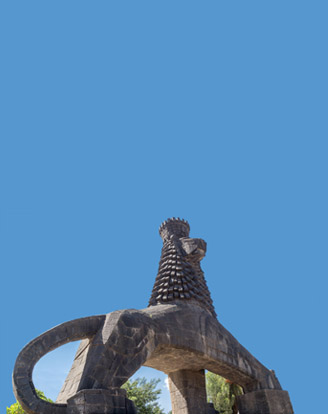





Lalibela’s rock-hewn churches are among the wonders of the Christian world, and the surrounding mountains hide more ancient sanctuaries.
- Bete Giyorgis — The cross-shaped Church of St George, carved downwards into the rock, is Lalibela’s most iconic sight.
- Northern group of churches — Includes Bete Medhane Alem, often described as the largest monolithic church, and the frescoed Bete Maryam.
- Eastern group of churches — Explore Bete Amanuel, Bete Gabriel-Rufael and the dark tunnels that link the complex.
- Yemrehanna Kristos — A beautiful church built inside a cave, a scenic drive from town, older than the rock-hewn churches.
- Asheten Maryam — A hike or mule ride up the mountain above town to a rock monastery with sweeping views.
- Church services and chanting — Early-morning services with white-robed pilgrims are an unforgettable experience; visit respectfully.
- Traditional food and tej — Try injera with local stews and honey wine in a traditional house.
Lalibela sits at about 2,500 metres, so days are mild and nights cool. The dry season from about October to March brings clear skies and is the most popular time to visit, while the main rains usually fall from about June to September.
The great festivals are a highlight: Genna (Ethiopian Christmas) on 7 January draws huge numbers of pilgrims, and Timkat (Epiphany) in mid-January is celebrated with processions. Accommodation fills up early for these dates, so plan well ahead.
Lalibela Airport lies some distance outside the town, and the road winds up through the highlands into Lalibela. Flights are domestic, mainly linking Addis Ababa and other historic route destinations.
There is no public transport. Minibuses and taxis meet most flights, and many hotels offer airport transfers when booked ahead. A pre-arranged transfer is the most comfortable option, especially during festival periods.
Lalibela has guesthouses, mid-range hotels and some lodges with superb valley views.
- Near the church complexes — Walk to sunrise services and the main sites; ideal for first-time visitors.
- Hillside hotels — Spread along the ridge with sweeping views over the valley; good for a relaxed stay.
- Out-of-town lodges — Quieter eco-lodges suit travellers who want peace and nature, with a short drive to the churches.
- Travel advice: Parts of the Amhara Region have been affected by insecurity, so check your government’s latest travel advice before travelling and follow local guidance.
- Guides and tickets: A single ticket covers the main churches; hiring a licensed guide brings the history to life.
- Etiquette: Remove shoes inside churches, dress modestly and ask before photographing priests or pilgrims.
- Footwear: Bring socks and easy slip-on shoes; church floors and passageways can be uneven and dark, so a torch helps.
- Money: Carry birr in cash; card acceptance is limited and ATMs can run out.
Frequently asked questions
Which airport serves Lalibela?
Lalibela is served by Lalibela Airport (LLI), outside the town.
How do I get from the airport to the town?
Take a minibus or taxi that meets flights, or book a hotel transfer in advance.
What currency is used in Lalibela?
Ethiopia uses the Ethiopian birr (ETB). Cash is essential.
Do I need a visa to visit Lalibela?
Entry requirements depend on your nationality and can change. Check RwandAir’s travel requirements tool or the official government website before travelling.
When is the best time to visit Lalibela?
The dry season from about October to March, with Genna and Timkat in January as highlights.
How many rock-hewn churches are there in Lalibela?
The UNESCO-listed complex has eleven medieval rock-hewn churches, mostly in two main groups plus the separate Bete Giyorgis.
Updated: