




Montreal is easy to explore on foot, by bike and on its efficient metro.
- Old Montreal — Cobbled streets, historic stone buildings and the Old Port along the river.
- Notre-Dame Basilica — A Gothic Revival church famed for its richly decorated blue and gold interior.
- Mount Royal — The park-covered hill that gives the city its name, with lookouts over downtown.
- Jean-Talon Market — One of North America’s largest open-air markets, full of Quebec produce.
- Plateau Mont-Royal and Mile End — Colourful neighbourhoods known for outdoor staircases, cafés and the city’s famous bagels.
- Montreal Museum of Fine Arts — A major museum with a broad collection of Canadian and international art.
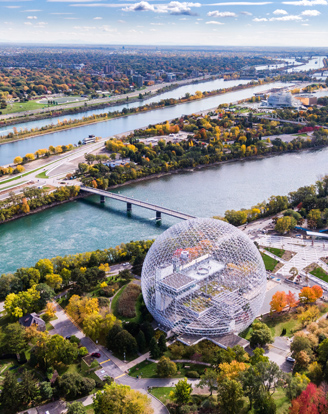
- Olympic Park area — Home to the Biodôme and the Montreal Botanical Garden.
Montreal has warm summers and very cold, snowy winters. Summer is the city’s liveliest season, with terraces, parks and a series of well-known festivals, including the Montreal International Jazz Festival and Just for Laughs. Early autumn brings crisp weather and spectacular foliage on Mount Royal.
Winters are long and freezing, but the city embraces them with skating, winter festivals and an extensive network of underground passages linking shops and metro stations downtown. Spring is short and can be slushy as the snow melts.
Montréal–Trudeau International Airport is in Dorval, about 20 km west of downtown Montreal. A dedicated express bus runs between the airport and downtown around the clock, stopping at key points in the city centre.
Taxis and ride-hailing services are available outside arrivals, and many hotels can arrange transfers. Journey times depend on motorway traffic, which can be heavy during rush hour.
The metro links most neighbourhoods, so you can choose based on the atmosphere you prefer.
- Old Montreal — Historic and romantic, with boutique hotels; ideal for couples.
- Downtown — Central, with major hotels, shopping and the underground city; good for first-timers and business travellers.
- Plateau Mont-Royal — Artsy and residential, full of cafés and restaurants.
- Mile End — Creative and relaxed, famous for bagel bakeries and independent shops.
- Money: Cards are accepted almost everywhere. Sales taxes are added at the till, and tipping around 15–20% in restaurants is customary.
- Getting around: The metro and buses are efficient, and the city has an extensive network of cycle lanes and shared bikes.
- Language: French is the main language; greeting with “Bonjour” is appreciated, and most people in central areas also speak English.
- Winter: Pack a warm coat, hat, gloves and waterproof boots for winter visits.
- Food: Try poutine, Montreal-style bagels and smoked meat sandwiches.
Frequently asked questions
Which airport serves Montreal?
Montreal is served by Montréal–Trudeau International Airport (YUL), in Dorval, about 20 km west of downtown.
How do I get from the airport to the city centre?
Take the round-the-clock express bus to downtown, or use a taxi or ride-hailing service.
What currency is used in Montreal?
Canada uses the Canadian dollar (CAD). Cards are accepted almost everywhere.
Do I need a visa to visit Montreal?
Entry requirements depend on your nationality and can change. Check RwandAir’s travel requirements tool or the official government website before travelling.
When is the best time to visit Montreal?
May to October offers the best weather, with festivals in summer and colourful foliage in autumn. Winters are very cold.
Do people speak English in Montreal?
French is the official language of Quebec and the most widely spoken in Montreal, but English is also common, especially downtown and in tourist areas.
Updated: