





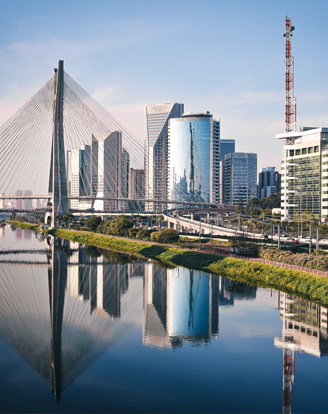
São Paulo is enormous, but its cultural highlights cluster around a few key districts.
- Avenida Paulista and MASP — The city’s iconic avenue and its landmark art museum, raised on striking red pillars.
- Ibirapuera Park — A huge green park with museums and pavilions designed by Oscar Niemeyer.
- Mercado Municipal — A historic market hall famous for fruit stalls and its generous mortadella sandwiches.
- Pinacoteca de São Paulo — One of Brazil’s most important art museums, housed in a restored historic building.
- Vila Madalena and Beco do Batman — A bohemian district with bars, galleries and a famous street-art alley.
- Liberdade — The heart of the city’s Japanese-Brazilian community, with shops, restaurants and a weekend market.
- Theatro Municipal — An elegant early-20th-century opera house in the historic centre.
São Paulo has a mild subtropical climate thanks to its altitude, with seasons opposite to the Northern Hemisphere. Autumn (April to May) and spring (September to November) bring comfortable temperatures and less rain, ideal for exploring the city.
Summer, from December to March, is warm and humid with frequent heavy afternoon showers, while winter, from June to August, is dry and mild with cool nights. Carnival, usually in February or March, fills the streets with parades and street parties.
São Paulo/Guarulhos International Airport, Brazil’s busiest, is in the neighbouring city of Guarulhos, about 25 km north-east of central São Paulo. A commuter rail line links the airport with the city’s rail and metro network, with a shuttle bus between the terminals and the station.
Airport coaches, official taxis and ride-hailing services are also available. Road journeys can be long during rush hour, so allow plenty of time.
São Paulo is vast, so staying near a metro station in a central district makes getting around easier.
- Avenida Paulista and Bela Vista — Central and well connected, close to museums and theatres; ideal for first-timers.
- Jardins — Leafy and upscale, with designer shops and top restaurants.
- Pinheiros and Vila Madalena — Creative, lively areas with bars, cafés and nightlife.
- Itaim Bibi — A modern business district with hotels and restaurants; suits business travellers.
- Money: Cards are widely accepted, and instant digital payments are common; carry a little cash for markets and street food.
- Getting around: The metro is clean and efficient; use ride-hailing or registered taxis, especially at night.
- Safety: Keep phones and valuables out of sight in busy streets, and stay aware of your surroundings after dark.
- Food: Try pizza, pastel, feijoada and the city’s diverse international cuisines.
- Language: Portuguese is the main language; learning a few basic phrases helps, as English is less widely spoken outside hotels.
Frequently asked questions
Which airport serves São Paulo?
São Paulo’s main international airport is São Paulo/Guarulhos International Airport (GRU), about 25 km north-east of the city centre.
How do I get from the airport to the city centre?
Take the commuter train connecting to the metro, an airport coach, an official taxi or a ride-hailing car.
What currency is used in São Paulo?
Brazil uses the Brazilian real (BRL). Cards are widely accepted.
Do I need a visa to visit São Paulo?
Entry requirements depend on your nationality and can change. Check RwandAir’s travel requirements tool or the official government website before travelling.
When is the best time to visit São Paulo?
April to May and September to November offer comfortable weather and less rain. Summer is warm and wet.
Is São Paulo known for its food?
Yes. São Paulo is one of Latin America’s great food cities, known for its pizza, Japanese and Middle Eastern influences, bustling markets and a wide range of restaurants.
Updated: