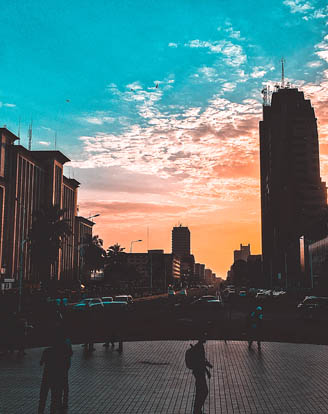





Yaoundé rewards visitors with views, culture and easy access to nature.
- Mont Fébé — A hill overlooking the city, home to a Benedictine monastery with a museum of Cameroonian art and sweeping views.
- Reunification Monument — A striking monument celebrating the reunification of Cameroon, with sculptures and views over the city.
- National Museum — Housed in the former presidential palace, presenting Cameroon’s history, art and cultures.
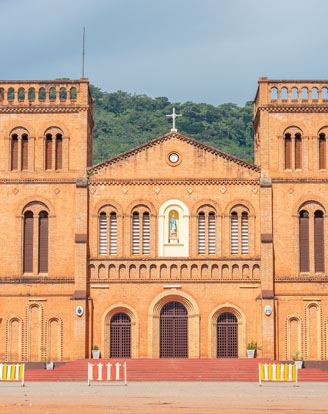
- Notre-Dame des Victoires Cathedral — The city’s main Catholic cathedral, notable for its modern architecture.
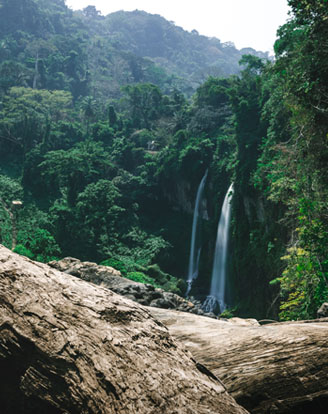
- Mefou primate sanctuary — A forest sanctuary outside the city caring for rescued gorillas, chimpanzees and monkeys.
- Marché Central and Mokolo market — Lively markets selling food, fabrics, crafts and everyday goods.
- Mvog-Betsi Zoo — A city zoo known for its primates, popular with families.
Yaoundé has a tropical climate moderated by its altitude, so temperatures are warm rather than extremely hot. It has two rainy seasons, roughly from March to June and from September to November, separated by a shorter dry spell in the middle of the year and a main dry season from December to February.
December to February is the best time to visit, with less rain and easier road travel to sanctuaries and the countryside. The short dry period around July and August is also a reasonable choice, with cooler, often cloudy weather.
Yaoundé Nsimalen International Airport lies south of the city, typically a 30 to 45-minute drive from the centre depending on traffic. It handles international and domestic flights.
Taxis are available outside the terminal; agree the fare before setting off. Many hotels offer airport transfers that can be booked in advance, which is often the most comfortable option. Traffic in the city can be heavy, so allow extra time when heading to the airport.
Yaoundé is spread over hills, so pick an area that suits your plans.
- Bastos — A leafy, upmarket district with embassies, hotels and restaurants; popular with business and diplomatic visitors.
- City centre — Close to government buildings, banks and the Marché Central; practical for short stays.
- Mont Fébé area — Hillside hotels with views and a quieter atmosphere.
- Nlongkak — A busy central neighbourhood with local restaurants and nightlife.
- Money: Carry CFA francs in cash; cards are accepted mainly at larger hotels and some supermarkets.
- Getting around: Shared taxis are common; for comfort and security, consider a private taxi or a driver arranged by your hotel.
- Identification: Carry a copy of your passport, as police checks are common.
- Photography: Avoid photographing government buildings, military sites and officials.
- Health: Malaria is present, so seek medical advice before travel and use insect repellent.
Frequently asked questions
Which airport serves Yaoundé?
Yaoundé is served by Yaoundé Nsimalen International Airport (NSI), south of the city.
How do I get from the airport to the city centre?
Taxis and hotel transfers are the usual options. The drive typically takes 30 to 45 minutes.
What currency is used in Yaoundé?
The Central African CFA franc (XAF) is used. Cash is essential for most everyday purchases.
Do I need a visa to visit Cameroon?
Entry requirements depend on your nationality and can change. Check RwandAir’s travel requirements tool or the official government website before travelling.
When is the best time to visit Yaoundé?
December to February, the main dry season, is the most comfortable time to visit.
Why is Yaoundé called the city of seven hills?
Yaoundé is built across several hills, including Mont Fébé, which give the city its rolling landscape and many viewpoints.
Updated: