




Top things to do in Abuja
Abuja's wide avenues and planned districts make it easy to explore, and its hilly setting gives many sights an impressive backdrop.
- Aso Rock — The huge granite outcrop that dominates the city skyline, with the Presidential Villa and National Assembly nearby. It is best admired from a distance.
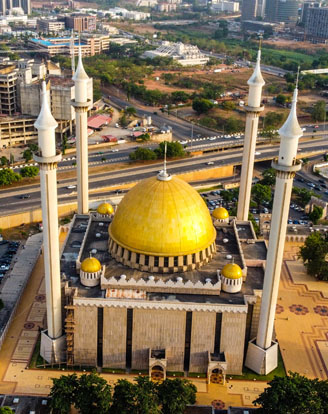
- Nigerian National Mosque — A landmark with a golden dome and four tall minarets in the city centre. Non-Muslim visitors may be able to visit outside prayer times when dressed modestly.
- National Christian Centre — A striking modern cathedral close to the National Mosque, reflecting the country's religious diversity.
- Millennium Park — The city's largest park, in Maitama, with lawns, gardens and a river, popular for picnics and weekend strolls.
- Jabi Lake — A lakeside area for walks, boat rides and sunset views.
- Wuse Market — One of the city's busiest markets, packed with fabrics, fresh produce and everyday goods.
- Zuma Rock — A massive monolith just outside the Federal Capital Territory on the road north, often pictured as a symbol of Nigeria.
Best time to visit Abuja
Abuja has a tropical climate with a clear wet and dry season. The dry season, from about November to March, is the most comfortable time to visit, with sunny days and cooler nights. From December to February the Harmattan wind can bring dust and hazy skies.
The rainy season runs from around April to October, with frequent heavy showers and thunderstorms. The landscape turns green and lush, but outdoor plans may need to be flexible.
Getting from the airport
Nnamdi Azikiwe International Airport (ABV) lies outside the city to the west, connected to the centre by a main expressway. Taxis, ride-hailing apps and hotel or pre-booked transfers are the usual options. Allow extra time during rush hour and in heavy rain.
Where to stay
Abuja is divided into planned districts, and most visitors stay close to the centre.
- Maitama — An upmarket district with embassies, leafy streets and easy access to Millennium Park.
- Asokoro — A quiet, secure residential area near Aso Rock and many government buildings.
- Wuse 2 — Busy and convenient, with shops, restaurants and nightlife.
- Central Business District — Ideal for business travellers, close to ministries, offices and the main landmarks.
Travel tips
- Money: Cards are accepted in many larger venues, but carry naira in cash for markets, taxis and tips.
- Getting around: Distances are large, so use ride-hailing apps, registered taxis or an arranged driver.
- Etiquette: Dress modestly, particularly when visiting religious sites, and always greet people before asking questions.
- Photography: Avoid photographing government buildings, security installations and officials.
- What to pack: Light clothing, sunscreen, a light jacket for dry-season evenings and an umbrella during the rains.
- Before you go: Check the current entry and health requirements for Nigeria before you travel.
Frequently asked questions
What is the best time to visit Abuja?
November to February is usually the best time, during the dry season, with sunny days and cooler nights. Expect some Harmattan haze between December and February.
Which airport serves Abuja?
Abuja is served by Nnamdi Azikiwe International Airport (ABV), located outside the city to the west.
How do I get from the airport to the city centre?
Taxis, ride-hailing apps and pre-booked transfers are the most convenient options. The route follows a main expressway into the city.
What currency is used in Abuja?
Nigeria uses the Nigerian naira (NGN). Cards work in many hotels and larger shops, but cash is useful for markets and taxis.
Do I need a visa to visit Nigeria?
Entry requirements depend on your nationality and change from time to time. Check the latest requirements with RwandAir's travel requirements tool or the official government website before you travel.
When did Abuja become the capital of Nigeria?
Abuja officially became Nigeria's capital in 1991, taking over from Lagos. It was planned as a new city in the centre of the country.
Updated: