





Top things to do in Amman
Amman rewards visitors who take time to wander its hills, where layers of history meet a lively modern city.
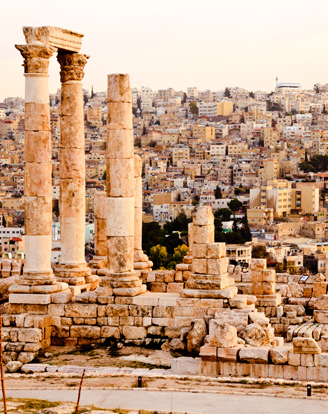
- Amman Citadel — The city’s highest hill, crowned by the Temple of Hercules and an Umayyad palace, with sweeping views over downtown.
- Roman Theatre — A large, well-preserved amphitheatre carved into the hillside in the 2nd century AD, still used for occasional performances.
- Downtown (Al-Balad) — The old heart of Amman, full of souqs, spice shops, sweet bakeries and simple restaurants serving falafel and hummus.
- Rainbow Street — A lively street in Jabal Amman lined with cafés, craft shops and restaurants, popular in the evenings.
- King Abdullah I Mosque — A striking blue-domed mosque that welcomes respectfully dressed visitors outside prayer times.
- The Jordan Museum — The country’s main museum, presenting Jordanian history from prehistoric times, including fragments of the Dead Sea Scrolls.
- Day trip to Jerash — One of the best-preserved Roman provincial cities in the world, around an hour’s drive north of Amman.
Best time to visit Amman
Spring (March to May) and autumn (September to November) are the best seasons to visit Amman. Days are warm and sunny, evenings are mild, and the weather is ideal for walking the city’s hills or combining a stay with trips to Jerash, the Dead Sea, Wadi Rum or Petra. Spring also brings wildflowers to the surrounding countryside.
Summer, from June to August, is hot and dry, although Amman’s altitude keeps it more comfortable than the Dead Sea or the desert, and nights are often pleasant. Winter, from December to February, is cool and can be cold at night, with rain and occasional snow on the hills; it is a quieter time to visit, with fewer visitors at the main sites.
The Jerash Festival of Culture and Arts, usually held in summer, brings music, dance and theatre to the ancient ruins. During Ramadan, whose dates change each year, daytime life is quieter and evenings become lively and festive, with special meals and sweets.
Getting from the airport
Queen Alia International Airport (AMM) is located around 30 to 35 km south of central Amman, along the main Desert Highway. The drive into the city usually takes 30 to 45 minutes, or longer at busy times and depending on which part of Amman you are heading to.
- Airport express bus — A dedicated airport bus service runs regularly between the terminal and the city, stopping at the main bus stations. The journey takes around 45 minutes to an hour.
- Airport taxi — Official taxis wait outside arrivals and are the most convenient door-to-door option. Confirm the fare before setting off.
- Ride-hailing apps — App-based car services operate in Amman and can be used for trips to and from the airport.
- Hotel transfers and car hire — Many hotels can arrange a pick-up, and rental desks in the terminal suit travellers planning to drive on to the Dead Sea or Petra.
There is no rail link to the city, so road transport is the only option. Traffic in Amman can be heavy at rush hour, so allow extra time when returning to the airport.
Where to stay
Amman is built across many hills, or jabals, and each area has its own character. Choose a base according to whether you want history on your doorstep, a lively café scene or quiet upmarket streets.
- Downtown (Al-Balad) — Suits budget travellers and those who want to be close to the Roman Theatre, the Citadel and the souqs.
- Jabal Amman — A characterful area around Rainbow Street with traditional stone houses, cafés and galleries, ideal for first-time visitors.
- Abdali — A modern district of towers, shopping and business hotels, convenient for work trips.
- Shmeisani — A central business and residential area with many restaurants and good taxi access to the rest of the city.
- Abdoun and Sweifieh — Upmarket western neighbourhoods with embassies, shopping streets and dining, suited to quieter stays.
Distances between hills can be deceptive, as streets are steep and winding, so most visitors combine walking in one area with short taxi rides between districts.
Travel tips
- Getting around — Yellow taxis and ride-hailing apps are the easiest way to travel; ask for the meter to be used in taxis. Amman is hilly, so wear comfortable shoes for walking.
- Dress and etiquette — Jordan is welcoming but conservative; dress modestly, covering shoulders and knees, especially in downtown and at religious sites. Women should cover their hair in mosques.
- Weekend and Ramadan — The weekend is Friday and Saturday, and many shops open later on Friday. During Ramadan, avoid eating or drinking in public during daylight hours.
- Hospitality — Accepting a cup of tea or coffee when offered is a sign of courtesy, and a few words of Arabic are always appreciated.
- Payment and tipping — Cards are accepted in most hotels and restaurants, but carry cash for taxis, souqs and small cafés. A tip of around 10% is customary in restaurants.
- Entry requirements — Visa and entry rules depend on nationality and can change, so check before you travel.
Frequently asked questions
What is the best time to visit Amman?
Spring (March to May) and autumn (September to November) are ideal, with warm days and mild evenings. Summer is hot but dry, while winter is cool with rain and sometimes snow on the hills.
Which airport serves Amman?
Amman is served by Queen Alia International Airport (AMM), Jordan’s main international gateway, located around 30 to 35 km south of the city centre.
How do I get from the airport to the city centre?
An airport express bus runs regularly to the city in around 45 minutes to an hour. Official taxis and ride-hailing apps are quicker for door-to-door trips, usually taking 30 to 45 minutes. There is no train.
What currency is used in Amman?
Jordan uses the Jordanian dinar (JOD). Cards are widely accepted in hotels, larger restaurants and shops, but cash is useful for taxis, markets and small cafés. ATMs are easy to find across the city.
Do I need a visa to visit Jordan?
Visa requirements depend on your nationality and the purpose of your trip. Check official government sources or the IATA Travel Centre for the latest entry rules well before you travel.
Can I visit Petra and the Dead Sea from Amman?
Yes. The Dead Sea is roughly an hour’s drive from Amman and easy as a day trip. Petra is around three hours away by road, so many travellers spend at least one night nearby to explore it properly.
Updated: