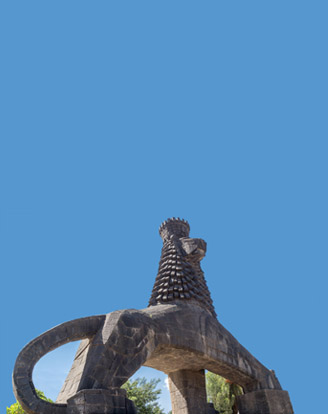




Mekelle combines highland city life with access to some of Ethiopia’s most remarkable landscapes and historic sites.
- Emperor Yohannes IV Palace — The late-19th-century palace of the emperor, now a museum, is the city’s best-known landmark.
- Gheralta rock churches — Ancient churches cut into sandstone cliffs, including the dramatic Abuna Yemata Guh, a drive north of the city.
- Danakil Depression — Mekelle is the classic starting point for guided trips to the colourful hot springs of Dallol, salt flats and the lava lake of Erta Ale.
- Salt caravans — Learn about the centuries-old salt trade between the Danakil and the highlands, long centred on Mekelle.
- Wukro Chirkos — A rock-hewn church close to the main road north, easy to combine with a day trip.
- City markets — Browse spices, baskets, textiles and local produce.
Mekelle lies at over 2,000 metres and enjoys mild days with cool nights. The main rainy season usually falls from about June to September, while the dry months from about October to March bring clear skies and easier travel on rural roads.
For the Danakil Depression, the cooler months from about November to February are strongly recommended, as summer temperatures in the lowlands are extreme. Major Orthodox festivals such as Meskel and Timkat are celebrated widely in the region.
Alula Aba Nega International Airport is located a short drive south-east of central Mekelle and mainly handles domestic flights from Addis Ababa.
Taxis and bajajs (three-wheeled auto-rickshaws) are usually available, and hotels and tour operators can arrange pick-ups. There is no rail link. Travellers joining Danakil tours are often collected directly by their operator.
Mekelle has a reasonable choice of hotels, from simple guesthouses to larger business hotels.
- City centre — Near the palace, restaurants and markets; convenient for sightseeing and evening strolls.
- Around the main squares and avenues — Mid-range hotels popular with tour groups preparing for the Danakil.
- Quieter outskirts — Larger hotels with more space, suited to business travellers and longer stays.
- Travel advice: The Tigray Region has been affected by conflict in recent years, so check your government’s latest travel advice and current access conditions before planning a trip.
- Danakil trips: Visit only with an experienced, licensed operator, and carry plenty of water and sun protection.
- Money: Carry enough birr in cash, as banking services and card acceptance can be limited.
- Etiquette: Dress modestly at churches and remove shoes before entering; some cliff churches are closed to women by tradition.
- Language: Tigrinya is the main language; a few greetings go a long way, and English is spoken in hotels.
Frequently asked questions
Which airport serves Mekelle?
Mekelle is served by Alula Aba Nega International Airport (MQX), a short drive from the city centre.
How do I get from the airport to the city centre?
Take a taxi or bajaj, or arrange a pick-up with your hotel or tour operator.
What currency is used in Mekelle?
Ethiopia uses the Ethiopian birr (ETB).
Do I need a visa to visit Mekelle?
Entry requirements depend on your nationality and can change. Check RwandAir’s travel requirements tool or the official government website before travelling.
When is the best time to visit Mekelle?
The dry season from about October to March; November to February is best for the Danakil.
Can I visit the Danakil Depression from Mekelle?
Mekelle has traditionally been the main starting point for guided Danakil tours; check current conditions and book with a licensed operator.
Updated: