




Top things to do in Muscat
Muscat stretches in a long ribbon along the coast between the mountains and the sea, with distinct districts linked by highways, so a car or taxi is the easiest way to move between the main sights.
- Sultan Qaboos Grand Mosque — Oman’s largest mosque, famous for its vast prayer hall, a huge hand-woven carpet and a spectacular chandelier; non-Muslim visitors are welcome at set times with modest dress.
- Mutrah Souq — One of the oldest markets in the Arab world, a maze of covered lanes scented with frankincense and filled with silver, spices, textiles and traditional crafts.
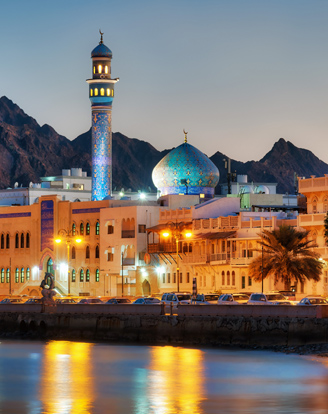
- Mutrah Corniche — A picturesque seafront promenade lined with traditional houses and fishing boats, especially lovely in the evening light.
- Old Muscat — The historic walled quarter, home to the ceremonial Al Alam Palace and flanked by the 16th-century Al Jalali and Al Mirani forts on the rocky harbour.
- Royal Opera House Muscat — An elegant venue of white stone and fine woodwork hosting opera, concerts and dance; guided tours are available on non-performance days.
- Bait Al Zubair — A private museum in Old Muscat showcasing Omani heritage, from traditional dress and jewellery to weapons and household items.
- Wadi Shab and the Bimmah Sinkhole — A popular day trip along the coast to a turquoise-water canyon for hiking and swimming, and a striking limestone sinkhole filled with emerald water.
Best time to visit Muscat
The best time to visit Muscat is from October to April, when days are warm and sunny and evenings are pleasantly mild. This is the ideal season for exploring the souqs and forts on foot, hiking in the wadis, camping in the desert and relaxing on the beaches. December to February is the coolest and most popular period, with comfortable temperatures for outdoor adventures.
From May to September, Muscat is extremely hot and often humid, with daytime temperatures frequently above 40°C. Sightseeing is best limited to early mornings and evenings, although this quieter season can offer good-value hotel stays. In summer, many Omanis head south to the Dhofar region, which enjoys a cooler monsoon season.
The city’s winter calendar includes cultural festivals, concerts and sporting events. The dates of Ramadan and the Eid holidays follow the Islamic lunar calendar and move earlier each year; during Ramadan, business hours change and the city comes alive after sunset, a special time to experience local traditions.
Getting from the airport
Muscat International Airport is located in the Seeb area, around 15 kilometres from the Qurum district and around 30 kilometres west of Mutrah and Old Muscat. A fast coastal highway links it with the main districts of the capital.
- Taxi — Official airport taxis wait outside the arrivals hall. The drive to Qurum usually takes around 20 minutes, and to Mutrah or Old Muscat around 30 to 40 minutes, depending on traffic.
- Ride-hailing apps — App-based ride and taxi services operate in Muscat and can be booked from the airport, often with the fare shown in advance.
- Public bus — Public buses connect the airport with several parts of the city, including Ruwi and Mutrah, a budget option for travellers with light luggage, though journeys take longer.
- Car hire — Car rental desks are located in the arrivals hall. Driving is a popular way to explore Oman, thanks to good roads and dramatic scenery beyond the city.
Many hotels also offer pre-arranged transfers. When departing, allow extra time at busy periods, and remember that the weekend in Oman falls on Friday and Saturday.
Where to stay
Muscat is spread along the coast, so it helps to choose a district that matches your plans, whether that is heritage sightseeing, beaches, shopping or business. Taxis and ride-hailing apps make it easy to move between areas.
- Mutrah — The traditional heart of the city, close to the souq, the Corniche and Old Muscat, ideal for travellers interested in culture and history.
- Qurum — A central district with parks, a long sandy beach, shopping and restaurants, a practical choice for first-time visitors and families.
- Shatti Al Qurum — An upmarket seafront area near the Royal Opera House, with beach resorts and cafés, suited to couples and those seeking a relaxing stay.
- Al Khuwair — A commercial district with offices, ministries and business hotels, convenient for business travellers and for reaching the Grand Mosque.
- Coastal resorts beyond the city — Secluded resorts along the rocky coast south-east of Old Muscat, perfect for travellers who want beaches, snorkelling and tranquillity.
Travel tips
- Dress respectfully — Modest clothing that covers the shoulders and knees is appreciated in public places. To visit the Grand Mosque, men and women should wear long, loose clothing, and women should also cover their hair.
- Ramadan etiquette — During Ramadan, avoid eating, drinking or smoking in public during daylight hours out of respect, and expect shorter opening hours for many businesses.
- Getting around — Taxis, ride-hailing apps and hire cars are the most practical ways to travel. Agree on the fare before starting if a taxi does not use a meter.
- Payment — Cards are widely accepted in hotels, malls and restaurants, but carry some rials for souqs, small shops and rural areas outside the city.
- Heat and outdoors — Carry plenty of water, use sun protection and wear sturdy shoes for wadi hikes. Always check weather conditions before visiting wadis, as flash floods can occur after rain.
- Entry requirements — Visa and entry rules for Oman depend on your nationality. Check the latest requirements with official sources before you travel.
Frequently asked questions
What is the best time to visit Muscat?
October to April is the best time, with warm, sunny days and mild evenings ideal for sightseeing, wadi hikes and beaches. December to February is the coolest period, while summer is extremely hot and often humid.
Which airport serves Muscat?
Muscat is served by Muscat International Airport (MCT), located in the Seeb area around 30 kilometres west of Mutrah and Old Muscat. It is Oman’s main international gateway and is linked to the city by a fast highway.
How do I get from the airport to the city centre?
Taxis and ride-hailing services take around 20 minutes to Qurum and 30 to 40 minutes to Mutrah or Old Muscat. Public buses are a slower budget option, and car hire desks are located in the arrivals hall.
What currency is used in Muscat?
Oman uses the Omani rial (OMR), which is divided into 1,000 baisa. Cards are widely accepted in hotels, malls and restaurants, but carry some cash for souqs, small shops and trips outside the city.
Do I need a visa to visit Oman?
Visa requirements depend on your nationality and the purpose of your trip. Please check official government sources or the IATA Travel Centre for the latest entry requirements before travelling.
Can visitors enter the Sultan Qaboos Grand Mosque?
Yes. Non-Muslim visitors are welcome at set visiting times. Men and women must wear long, loose clothing covering the arms and legs, and women must cover their hair. Check the visiting times locally before you go.
Updated: