



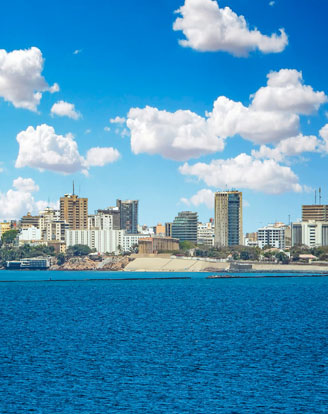
Top things to do in Dakar
Dakar packs culture, history and coastline into a compact peninsula.
- Gorée Island — A short ferry ride from the port, this UNESCO World Heritage Site is a car-free island of colourful houses whose House of Slaves recalls the Atlantic slave trade.
- African Renaissance Monument — A giant bronze statue on a hill overlooking the city and ocean, with sweeping views from the top.
- Museum of Black Civilisations — A striking modern museum celebrating the history, art and cultures of Africa and its diaspora.
- IFAN Museum of African Arts — A long-established museum with a fine collection of masks, textiles and traditional objects from across West Africa.
- Pointe des Almadies and Île de Ngor — Watch the sunset at the westernmost point of mainland Africa, then take a pirogue to little Ngor Island for beaches and surf.
- Soumbédioune — Visit the fishing beach as colourful pirogues return, and browse the nearby crafts village.
- Lake Retba — Known as the Pink Lake, this salt lake north-east of the city can take on a pink hue, especially in the dry season.
Best time to visit Dakar
Dakar has a long dry season from about November to June and a short rainy season from around July to October. Thanks to ocean breezes, it is often more pleasant than inland Senegal.
November to May is the most comfortable time to visit, with sunshine, low humidity and pleasant evenings; December to April can feel quite fresh at night. The rainy season is hotter and more humid, with occasional heavy storms.
Getting from the airport
Blaise Diagne International Airport (DSS) is well outside the city, roughly 45 km east of central Dakar, near the town of Diass. A toll motorway links the airport to the capital. Taxis, ride-hailing apps, airport shuttle buses and hotel or pre-booked transfers are all available. Allow plenty of time for the journey.
Where to stay
Where you stay in Dakar depends on whether you prefer the historic centre or the breezy western coast.
- Plateau — The historic and administrative centre, close to the port for Gorée ferries, markets and museums.
- Les Almadies — An upmarket coastal district on the western tip, with ocean views, restaurants and nightlife.
- Ngor — A relaxed fishing village atmosphere by the sea, popular with surfers.
- Mermoz and Point E — Central residential areas with a local feel, cafés and easy access to the rest of the city.
Travel tips
- Money: Cash in CFA francs is needed for markets, taxis and small shops; cards are accepted in larger hotels and businesses, and mobile payments are common locally.
- Getting around: Agree the fare before getting into a taxi, or use a ride-hailing app.
- Etiquette: Senegal is a predominantly Muslim country, so dress modestly away from the beach and greet people before starting a conversation.
- Bargaining: Haggling is expected in markets; stay friendly and patient.
- What to pack: Sunscreen, light clothing, a light jumper for cooler evenings and sandals for the beach.
- Before you go: Check the current entry and health requirements for Senegal before you travel.
Frequently asked questions
What is the best time to visit Dakar?
November to May is the best time, during the dry season, with sunshine, low humidity and pleasant ocean breezes. The rainy season runs from around July to October.
Which airport serves Dakar?
Dakar is served by Blaise Diagne International Airport (DSS), located near Diass, well outside the city.
How do I get from the airport to the city centre?
The airport is roughly 45 km east of central Dakar, linked by a toll motorway. Taxis, ride-hailing apps, airport shuttle buses and pre-booked transfers are available.
What currency is used in Dakar?
Senegal uses the West African CFA franc (XOF). Carry cash for markets and taxis, as cards are mainly accepted in larger establishments.
Do I need a visa to visit Senegal?
Entry requirements depend on your nationality and change from time to time. Check the latest requirements with RwandAir's travel requirements tool or the official government website before you travel.
How do I get to Gorée Island?
Ferries to Gorée Island leave from the port of Dakar, near the Plateau district, and the crossing is short. Arrive early at busy weekends.
Updated: