




Top things to do in Kano
Kano’s old city is the heart of its heritage, with markets, crafts and historic buildings that reflect a thousand years of trade and tradition.
- Kofar Mata Dye Pits — Centuries-old pits where dyers still use indigo to colour cloth by hand, among the oldest of their kind in West Africa.
- Kurmi Market — One of the oldest markets in the region, a maze of stalls selling textiles, leatherwork, brassware, spices and crafts.
- Ancient City Walls — Remains of the earthen walls and historic gates that once surrounded the old city of Kano.
- Emir’s Palace (Gidan Rumfa) — The traditional seat of the Emir of Kano, with striking earthen architecture in the heart of the old city.
- Gidan Makama Museum — A museum in a traditional Hausa building near the palace, with displays on Kano’s history, crafts and architecture.
- Dala Hill — A rocky hill in the old city, linked to the origins of Kano, offering views across rooftops and minarets.
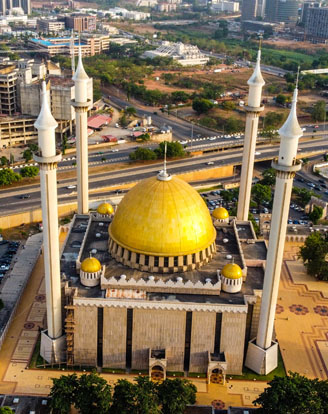
- Kano Central Mosque — The city’s principal mosque, a landmark beside the Emir’s Palace; visitors should dress modestly and respect prayer times.
Best time to visit Kano
The best time to visit Kano is during the dry season, from November to February, when days are warm and sunny and nights are cooler. The Harmattan wind blows from the Sahara during these months, bringing dry, dusty air and hazy skies, especially in December and January.
March to May is the hottest period, with very high daytime temperatures. The rainy season usually runs from June to September, bringing heavy showers, greener countryside and slightly cooler conditions.
Kano is famous for its Durbar festival, a spectacular procession of horsemen in colourful robes held during the Eid (Sallah) celebrations. The dates follow the Islamic lunar calendar and change each year, so check in advance if you hope to see it.
Getting from the airport
Mallam Aminu Kano International Airport lies within the city, only a few kilometres north of the main business districts, so transfers are relatively short.
- Taxi — Taxis are available outside the terminal. The drive to central areas such as Nassarawa GRA usually takes around 15 to 30 minutes, depending on traffic. Agree the fare before departure, as taxis do not use meters.
- Hotel transfers — Many hotels offer airport pick-ups on request, a convenient and recommended option for first-time visitors.
- Private car with driver — Pre-booking a car and driver is practical for business travellers and for exploring the old city and its sights.
There is no rail link from the airport, and local tricycle taxis are not practical with luggage, so most travellers go by car. Allow extra time on departure for traffic and security checks at the terminal.
Where to stay
Most visitors stay in Kano’s quieter government residential areas and travel into the old city for sightseeing.
- Nassarawa GRA — A leafy government residential area with many of the city’s hotels, restaurants and offices; ideal for business travellers and first-time visitors.
- Bompai — A commercial and industrial district east of the centre, convenient for business visits.
- Near the old city — Staying close to the walled city gives easy access to Kurmi Market, the dye pits and the Emir’s Palace, suited to heritage-focused travellers.
- Sabon Gari — A busy, cosmopolitan commercial area with markets and a lively atmosphere, popular with traders and budget travellers.
Travel tips
- Travel advice — Check your government’s current travel advice for Nigeria before planning your trip, as guidance may cover specific states, and review it again shortly before departure.
- Dress and etiquette — Kano is a predominantly Muslim city with conservative customs. Dress modestly, covering arms and legs, and be respectful around mosques and during prayer times.
- Alcohol — Islamic law applies in Kano State, and alcohol is restricted, so do not expect it to be widely available.
- Payment — Cash in naira is used for most purchases in markets and taxis. Cards are accepted in some hotels and larger businesses.
- Greetings and photography — Greetings matter; a friendly “sannu” (hello in Hausa) is appreciated. Always ask before photographing people, especially women.
- Entry requirements — Visa and entry rules depend on your nationality. Check the latest requirements with official sources before you travel.
Frequently asked questions
What is the best time to visit Kano?
November to February, during the dry season, is the most comfortable time to visit, with sunny days and cooler nights. March to May is very hot, and the rainy season usually runs from June to September.
Which airport serves Kano?
Kano is served by Mallam Aminu Kano International Airport (KAN), one of northern Nigeria’s main airports, located within the city only a few kilometres north of the main business districts.
How do I get from the airport to the city centre?
Taxis and hotel transfers are the easiest options. The drive to central areas such as Nassarawa GRA usually takes around 15 to 30 minutes, depending on traffic. Agree taxi fares before departure.
What currency is used in Kano?
Kano uses the Nigerian naira (NGN). Cash is needed for markets, taxis and small shops, while cards are accepted in some hotels and larger businesses.
Do I need a visa to visit Nigeria?
Visa requirements depend on your nationality and the purpose of your trip. Please check official government sources or the IATA Travel Centre for the latest entry requirements before travelling.
What is the Kano Durbar festival?
The Durbar is a spectacular procession of horsemen in colourful robes and ornate regalia, paying homage to the Emir during the Eid (Sallah) celebrations. Its dates follow the Islamic calendar and change each year.
Updated: