



The twin city is a practical base for exploring Ghana’s western coastline, with forts, fishing villages and beaches along the shore.
- Market Circle — Takoradi’s lively central market, ringed by stalls selling fabrics, produce and everyday goods.
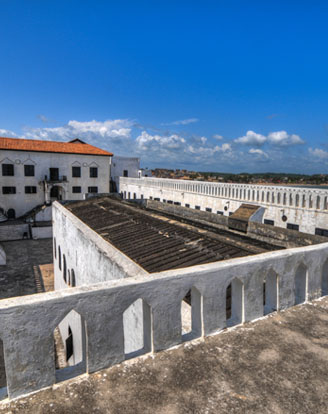
- Fort Orange — A small historic fort in Sekondi, now associated with a lighthouse overlooking the harbour.
- Busua Beach — A popular palm-fringed beach west of the city, known for its relaxed atmosphere and surf.
- Fort Metal Cross — A historic coastal fort at Dixcove, overlooking a busy fishing harbour.
- Cape Three Points — Ghana’s southernmost point, with a lighthouse, forest and quiet beaches.
- Fort San Sebastian — A Portuguese-built fort at Shama, east of the city, near the mouth of the Pra River.
- Nzulezu — Further west, visit the remarkable village built on stilts over a lake.
Sekondi-Takoradi has a warm, humid tropical climate all year. The main rainy season usually runs from about April to July, with a shorter rainy period around September to November. The Western Region is among the wettest parts of Ghana.
The drier months from November to March are the best time for beach trips and visits to the coastal forts, although the dusty Harmattan wind can bring hazy skies in December and January. Temperatures stay fairly constant, so light clothing, sun protection and rain gear are useful whatever the season.
Takoradi Airport is located within the city, close to central Takoradi, and serves domestic flights, mainly to and from Accra. It is also used by the Ghana Air Force, so security procedures apply around the site.
Taxis are the usual way to reach hotels and the city centre, and the drive is short. Many hotels can arrange pick-ups in advance. Ride-hailing apps operate in parts of the city, though availability can vary. For beach resorts west of the city, arrange a transfer with your accommodation.
Accommodation ranges from business hotels in the city to relaxed beach lodges along the western coast.
- Central Takoradi — Close to Market Circle, banks and restaurants; practical for short and business stays.
- Airport Ridge and nearby residential areas — Quieter neighbourhoods with business hotels and guesthouses, convenient for the airport.
- Sekondi — The older half of the twin city, near the harbour and historic sites.
- Busua and the western coast — Beach lodges and resorts for travellers seeking sea, sand and surf.
- Money: Cash in cedis is essential for taxis and markets; mobile money is widely used, and cards are accepted mainly in larger hotels.
- Getting around: Shared and private taxis are common; agree the fare before setting off and allow time for traffic.
- Etiquette: Greet people before asking questions, use your right hand to give and receive, and ask before taking photographs.
- Health: Use mosquito repellent, drink bottled or treated water and seek advice on recommended vaccinations before travelling.
- Beaches: Currents along this coast can be strong, so swim only where locals advise it is safe.
Frequently asked questions
Which airport serves Sekondi-Takoradi?
Sekondi-Takoradi is served by Takoradi Airport (TKD), close to central Takoradi, with domestic flights mainly to Accra.
How do I get from the airport to the city centre?
Taxis and hotel pick-ups are the usual options, and the drive into central Takoradi is short.
What currency is used in Sekondi-Takoradi?
Ghana uses the Ghanaian cedi (GHS). Cash and mobile money are the most common ways to pay.
Do I need a visa to visit Sekondi-Takoradi?
Entry requirements depend on your nationality and can change. Check RwandAir’s travel requirements tool or the official government website before travelling.
When is the best time to visit Sekondi-Takoradi?
The drier months from November to March are best for beaches and sightseeing. April to July is the main rainy season.
Why is it called a twin city?
Sekondi and Takoradi grew as separate towns and were later joined into one metropolitan area, with Takoradi as the main commercial and port centre.
Updated: